Venezuela Food: 20 Iconic Dishes, Drinks and Desserts to Know
Venezuela food is built on corn, beans, plantains, cheese and slow-cooked meats, then shaped by Indigenous, Spanish, African and immigrant kitchens. This guide explains what to eat, why it matters and how to try it.
What Makes Venezuelan Cuisine Unique?
Venezuelan cuisine sits where the Caribbean, the Andes and the Amazon meet. The country has a long coastline, mountains, plains and rainforest, so the plate changes from region to region.
Three traditions blend together. Indigenous cooks gave the country corn, cassava and chili. Spanish settlers added beef, rice, olive oil and sweets. African influence arrived through coconut, plantain and slow stews, especially along the coast.
Core Ingredients in Venezuelan Cooking
- Precooked cornmeal (harina de maíz): the base of arepas, empanadas and cachapas.
- Black beans (caraotas): simmered until creamy, often with a touch of sugar or panela.
- Plantains (plátanos): eaten ripe and fried (sweet) or green and fried (savory tostones).
- Cheeses: salty white queso blanco, soft queso de mano and firm, stretchy telita.
- Aliños: a sofrito-like base of onion, garlic, peppers, cumin and sweet chili (ají dulce).
- Papelón: unrefined cane sugar used in drinks and sweets.
Must-Try Venezuelan Dishes
Arepas: The Everyday Staple
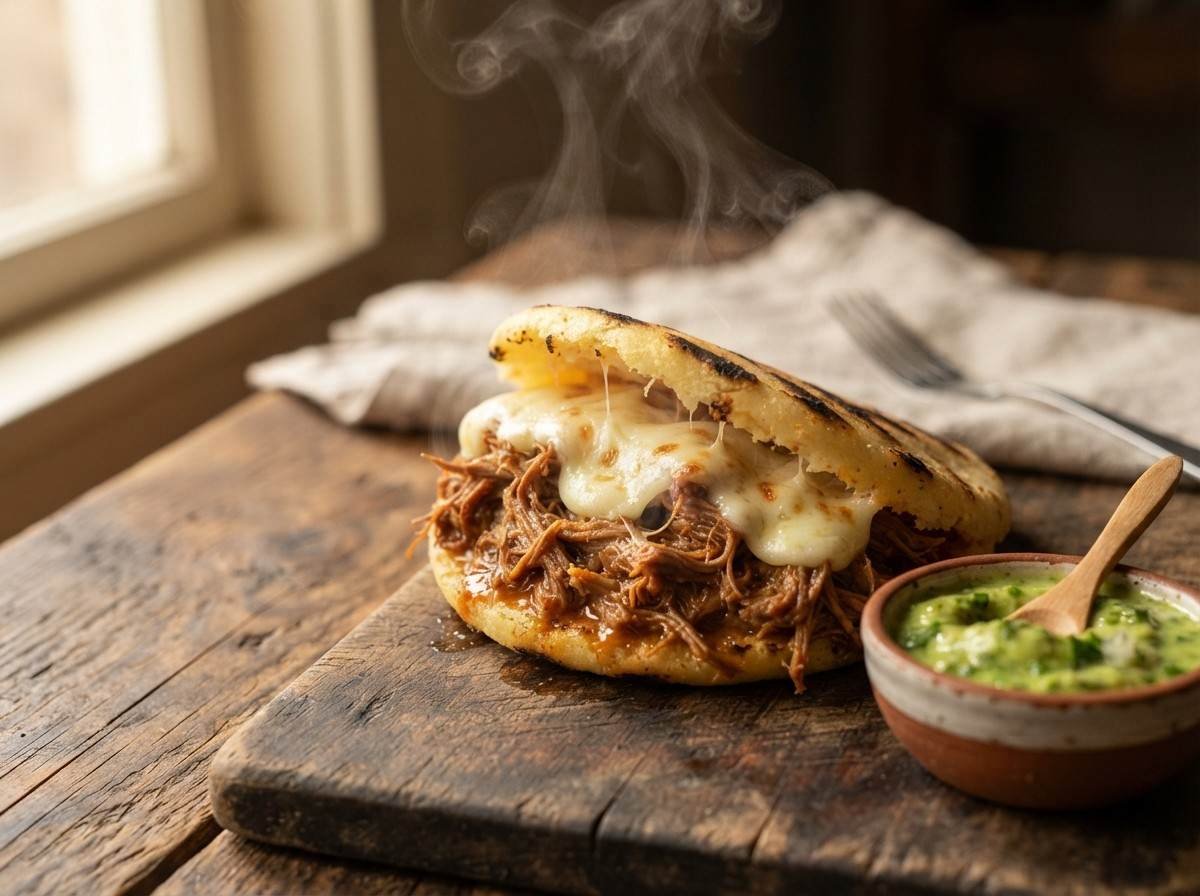
Arepas are round cornmeal cakes, grilled or baked, then split and filled. They are eaten at breakfast, lunch and dinner. Most Venezuelans grew up with them, and the dough is usually made from precooked cornmeal, which made home cooking much faster in the second half of the 20th century.
Popular arepa fillings
- Reina Pepiada: chicken and avocado salad, one of the best-known fillings.
- Domino: black beans and salty white cheese.
- Pelúa: shredded beef with grated yellow cheese.
- Catira: shredded chicken with yellow cheese.
- Sifrina: steak or other filling with cheese and toppings, depending on the cook.
Pabellón Criollo: The National Dish
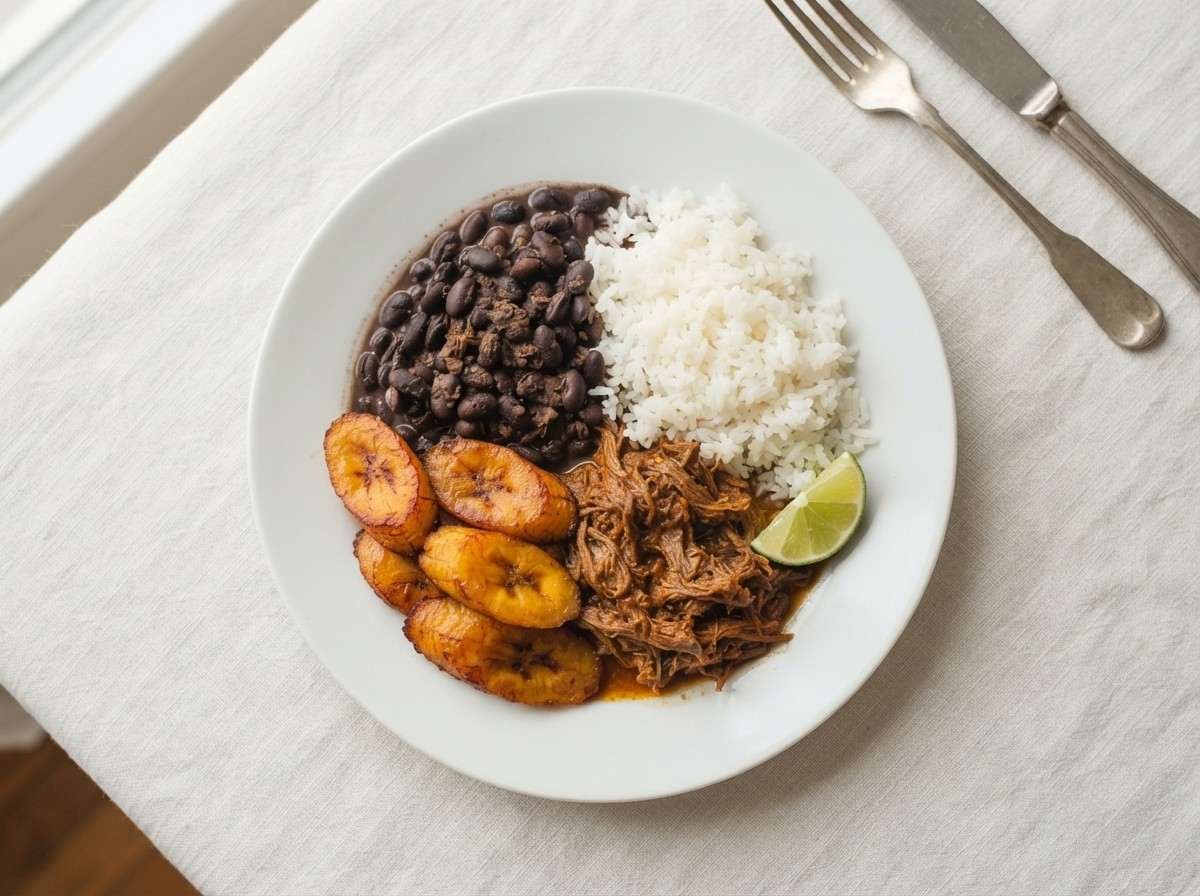
Pabellón criollo combines shredded beef (carne mechada), black beans, white rice and sweet fried plantain. The colors are often compared to the country’s flag. A fried egg or a slice of white cheese is a common extra. When the plantain slices go on top, it becomes “pabellón a caballo,” meaning “on horseback.”
Cachapas: Sweet Corn Pancakes
Cachapas are made from fresh corn, not cornmeal. The batter is thick and lightly sweet, and the pancake is folded around soft cheese, often queso de mano. Many eaters add fried pork (cochino frito) for a sweet-and-salty plate.
Hallacas: The Christmas Tradition
Hallacas are the dish that defines the holiday season. A corn dough is filled with a stew of beef, pork or chicken, then adds olives, capers and raisins. Each parcel is wrapped in plantain leaves, tied and boiled.
Making them is a family project that can take days. Many households share recipes passed down through generations, so every hallaca tastes a little different.
Other Everyday Plates
- Asado negro: beef roast cooked in a dark, caramelized sauce.
- Sancocho: hearty soup with meat, cassava, corn and root vegetables.
- Hervido: a lighter, broth-based boiled dinner.
- Pisca andina: a warming Andean soup of potato, egg and cilantro, often served at breakfast.
- Pescado frito: fried fish with tostones, common along the coast.
Venezuelan Street Food and Snacks
| Snack | What it is | Best moment to eat it |
|---|---|---|
| Tequeños | Cheese sticks wrapped in dough and fried | Parties and appetizers |
| Empanadas | Fried cornmeal turnovers with beef, cheese or fish | Breakfast or a quick lunch |
| Cachitos | Crescent bread filled with ham | Coffee break |
| Pan de jamón | Sweet-savory bread rolled with ham, olives and raisins | Christmas season |
| Perro caliente | Venezuelan hot dog with potato sticks and sauces | Late-night food |
| Patacón | Sandwich using fried green plantain as “bread” | Hearty lunch |

Venezuelan Desserts and Drinks
Desserts
- Quesillo: a caramel custard similar to flan, but denser.
- Tres leches: sponge cake soaked in three types of milk.
- Bienmesabe: coconut cake or cream, often served at celebrations.
- Golfeados: sticky cinnamon-and-papelón rolls, often filled or topped with cheese.
- Cocadas: chewy coconut sweets.
Drinks
- Papelón con limón: cold lime drink sweetened with raw cane sugar.
- Chicha: a sweet, creamy rice drink dusted with cinnamon.
- Malta: a malt soft drink, often served cold.
- Café con leche: Venezuelan coffee culture is strong, with small cups through the day.
Venezuela is also known for fine cacao. Regions such as Chuao have produced cacao prized by chocolate makers, so chocolate is worth tasting if given the chance.
Regional Venezuelan Food
- Caracas and the Central region: arepa shops, empanadas and bakery breads.
- Los Llanos (plains): grilled beef (carne en vara) and cheese.
- The Andes: soups, trout, potatoes and strong coffee.
- Zulia: plantain dishes, fresh cheese and “patacón” culture.
- Coast and islands: fish, shellfish, coconut and tostones.
Chinese Influence on Venezuelan Food
Venezuela, like many Latin American countries, has Chinese-run restaurants, often called restaurantes chinos. They are known for fried rice (arroz chino), noodle dishes and Chinese-style sauces adapted for local tastes.
That fusion helps explain why many Venezuelan communities abroad also look for Chinese takeout. Readers who want to explore it can browse Chinese food near me, compare delivery and takeout options, find top-rated cheap eats, or check halal Chinese and vegan and gluten-free Chinese choices. More dining guides are on the blog.
Venezuelan Food Today: Culture and Change
Searches for Venezuela food often relate to two topics: recipes and restaurants, and the country’s food crisis. Both are real parts of the story.
Economic hardship and shortages since the mid-2010s changed how many families eat, and millions of Venezuelans have emigrated. As a result, Venezuelan restaurants and food trucks have opened in cities across the Americas and Europe, keeping the cuisine alive abroad. For current figures on food security, readers should check reports from the World Food Programme or the UN.
Practical Tips for Trying Venezuelan Food
- Start with an arepa. Order a Reina Pepiada or Domino for a gentle introduction.
- Look for a Venezuelan restaurant or food truck near you. Search “Venezuelan restaurant near me” and read recent reviews.
- Ask about spice. Most Venezuelan food is mild. Hot sauce (ají picante) is usually served on the side.
- Cook at home. Buy precooked cornmeal labeled for arepas (such as Harina P.A.N.). Do not substitute regular cornmeal.
- Try guasacaca. This avocado-herb sauce goes with grilled meat and arepas.
- Dietary needs: many dishes are naturally gluten-free because they use corn, but check fillings and fried items.
Frequently Asked Questions
What is the national dish of Venezuela?
Pabellón criollo is the national dish. It combines shredded beef, black beans, white rice and fried sweet plantain.
What do Venezuelans eat for breakfast?
Common choices are arepas with cheese or ham, empanadas, scrambled eggs (perico) and coffee with milk.
Is Venezuelan food spicy?
Usually not. Seasoning is flavorful but mild, and hot sauce is served separately.
What is the difference between an arepa and a cachapa?
An arepa uses cooked cornmeal dough and is firm and savory. A cachapa uses fresh corn and is soft, sweet and pancake-like.
What do Venezuelans eat at Christmas?
Hallacas, pan de jamón, pernil (roast pork) and ensalada de gallina are the classic holiday foods.
Conclusion
Venezuela food is comforting, generous and full of contrast: crisp and soft, salty and sweet. Start with arepas, move on to pabellón criollo and cachapas, and save room for quesillo. Whether cooked at home or found at a local restaurant, these dishes show how corn, cheese and family tradition shape one of South America’s most welcoming cuisines.