Food & culture guide
Swedish Food: Traditional Dishes, Fika and the Culture Behind the Plate
Meatballs with lingonberry jam, dill-cured salmon, cardamom buns and a coffee break with its own name. Here is what Swedes really eat, when they eat it and how to try it yourself.
What Is Swedish Food?
Swedish food is the everyday and festive cooking of Sweden. It relies on ingredients that grow, swim and keep well through a long winter: fish, potatoes, pork, dairy, rye and berries. The cooking is plain on purpose. Salt, dill, butter and a little sweetness do most of the work.
Five ingredients show up again and again:
- Fish and seafood: salmon, herring and crayfish, fresh, cured, pickled or smoked.
- Potatoes: boiled, mashed, fried into pancakes or stuffed into dumplings.
- Berries: lingonberries, bilberries, black currants and rose hips.
- Dairy: cream, hard cheese and cultured milk such as filmjölk.
- Rye and sourdough breads: from soft loaves to crisp knäckebröd.
Husmanskost: the heart of home cooking
Husmanskost is the Swedish word for traditional home cooking. It covers dishes such as meatballs, pea soup and pytt i panna. These are filling, affordable meals that most Swedes grew up on and still cook on a weeknight.
How history shaped the Swedish plate
Preservation: salt, smoke and brine
Long winters made preserving a survival skill. Fish was salted, pickled, smoked or fermented, and those methods still define classics like pickled herring and gravlax.
Trade and new arrivals
Medieval trade with Germanic and Hanseatic partners brought spices and techniques. Potatoes arrived in the 18th century and later became a staple, even the base for Sweden’s potato-based snaps. More recently, immigration added falafel, kebab and other dishes to everyday menus.
Famous Swedish Dishes
People searching for traditional Swedish food usually want a shortlist. This table gives one, and the sections after it explain the dishes that matter most.
| Dish | What it is | Usually eaten |
|---|---|---|
| Köttbullar | Meatballs with cream sauce, potatoes and lingonberry jam | Weeknights, buffets |
| Gravlax | Salmon cured in salt, sugar and dill | Midsummer, Christmas, Easter |
| Inlagd sill | Pickled herring, many flavors | Holiday tables, with new potatoes |
| Janssons frestelse | Potato, onion and sprat gratin | Christmas |
| Pytt i panna | Diced fried potatoes and meat, topped with egg | Leftover dinners |
| Ärtsoppa | Yellow pea soup, followed by pancakes | Thursdays |
| Raggmunk | Potato pancakes with pork and lingonberries | Autumn and winter |
| Kroppkakor | Potato dumplings with a pork filling | Home dinners |
| Wallenbergare | Veal patty with peas and mashed potato | Restaurants, special dinners |
| Falukorv | Mild sausage from Falun, fried or baked | Family dinners |
| Surströmming | Fermented Baltic herring | Late summer parties |
| Kåldolmar | Stuffed cabbage rolls | Autumn and winter |
Köttbullar: Swedish meatballs
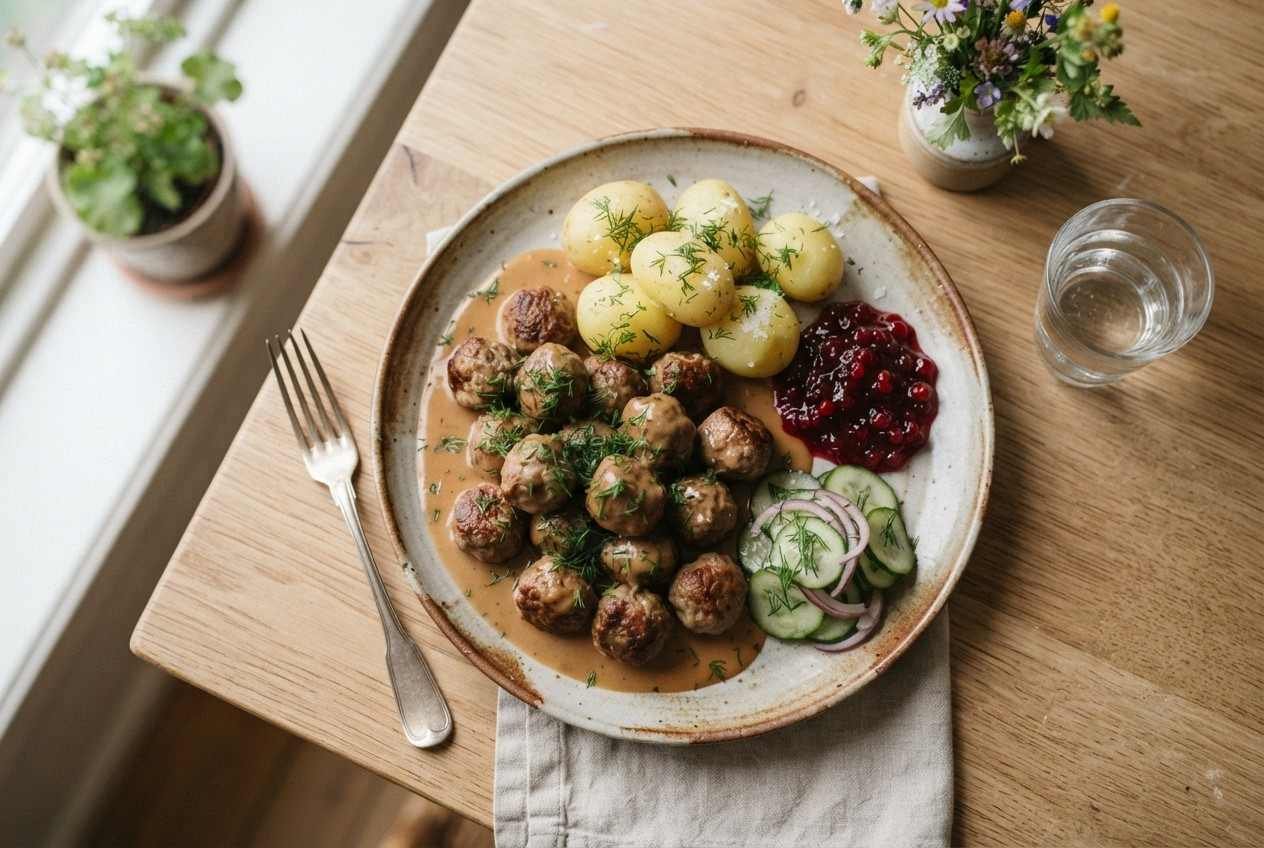
Swedish meatballs are small, soft and seasoned with pepper and sometimes allspice. They arrive with boiled potatoes, brown cream gravy, lingonberry jam and a few pickled cucumber slices. A popular story credits King Charles XII with bringing the recipe home from the Ottoman Empire, though food historians debate how much of that is legend. IKEA turned them into a worldwide icon.
Gravlax and pickled herring
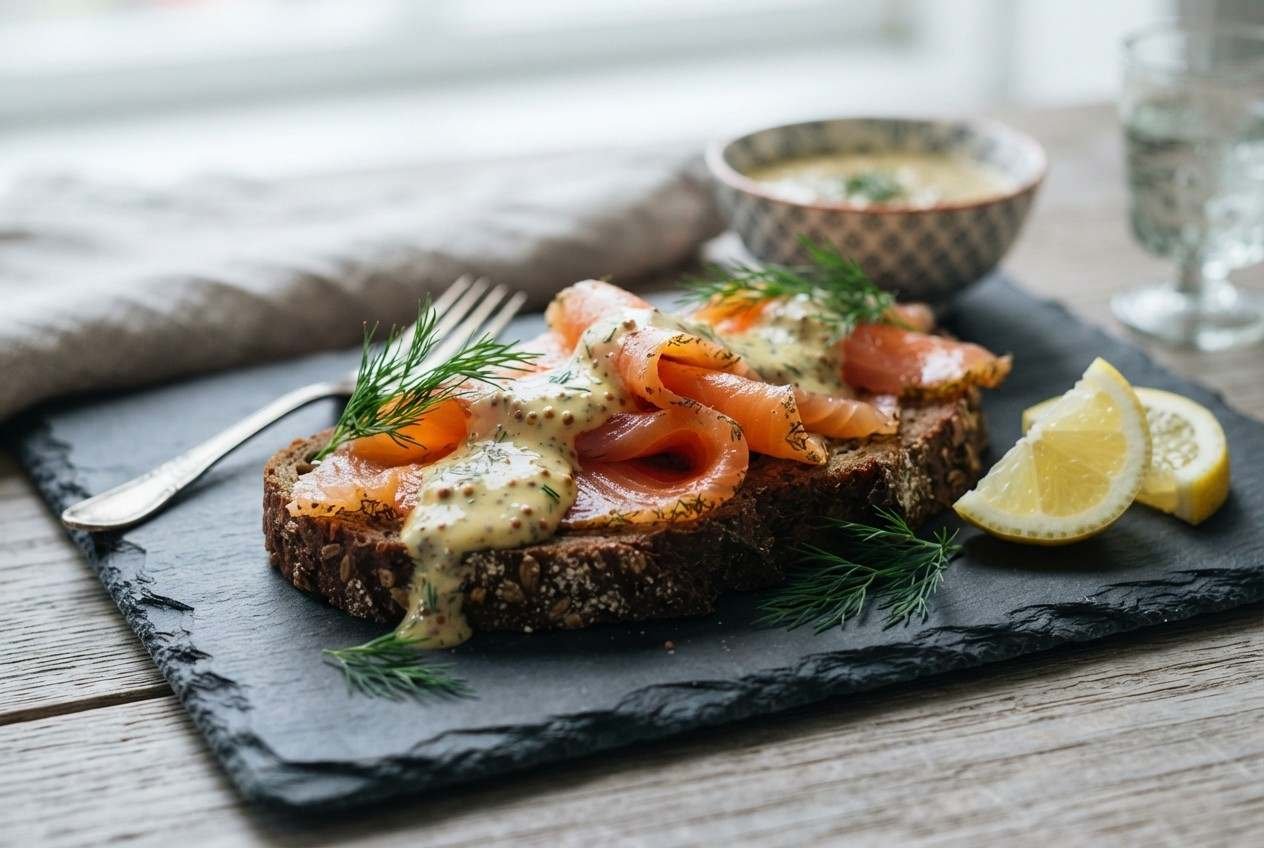
Fish is the soul of the Swedish table. Gravlax is raw salmon cured with salt, sugar and plenty of dill, then sliced thin and served with a mustard-dill sauce. Herring is even more common. Inlagd sill comes in mustard, onion, garlic and sweet-and-sour versions, and it is a fixture at Midsummer and Christmas.
Janssons frestelse
The name means “Jansson’s temptation.” Thin potato sticks, onion and brined sprats bake in cream until golden. It is salty, rich and almost always part of the Christmas buffet.
Ärtsoppa and the Thursday tradition
Thursday is traditionally pea soup day, with pancakes for dessert. The custom reaches back to the Middle Ages, and the Swedish Armed Forces still serve this meal on Thursdays. Many school canteens and lunch restaurants keep the habit alive.
Pytt i panna and potato dishes
Pytt i panna (“little bits in a pan”) turns leftover meat and potatoes into a crisp hash. A fried egg, pickled beetroot and ketchup finish it. Potatoes also star in raggmunk (grated potato pancakes) and kroppkakor (filled dumplings).
Surströmming: the famous fermented fish
Surströmming is Baltic herring fermented in a can until it swells. The smell is strong, so Swedes open it outdoors. It is eaten on thin bread with potatoes, onion and sour cream, and the traditional start of the season falls in August.
First-timer tipOpen the can outside and keep it well away from open windows. Serve it with plenty of cold water or light beer.
Fika and Swedish Desserts
What is fika?
Fika is a social break for coffee or tea with something sweet. It is as much about sitting down with other people as it is about the coffee. Workplaces schedule it, friends invite each other to it and skipping it feels odd. The habit is commonly traced to the early 1900s. Sweden also ranks among the heaviest coffee-drinking countries in the world.
Kanelbullar: cinnamon buns
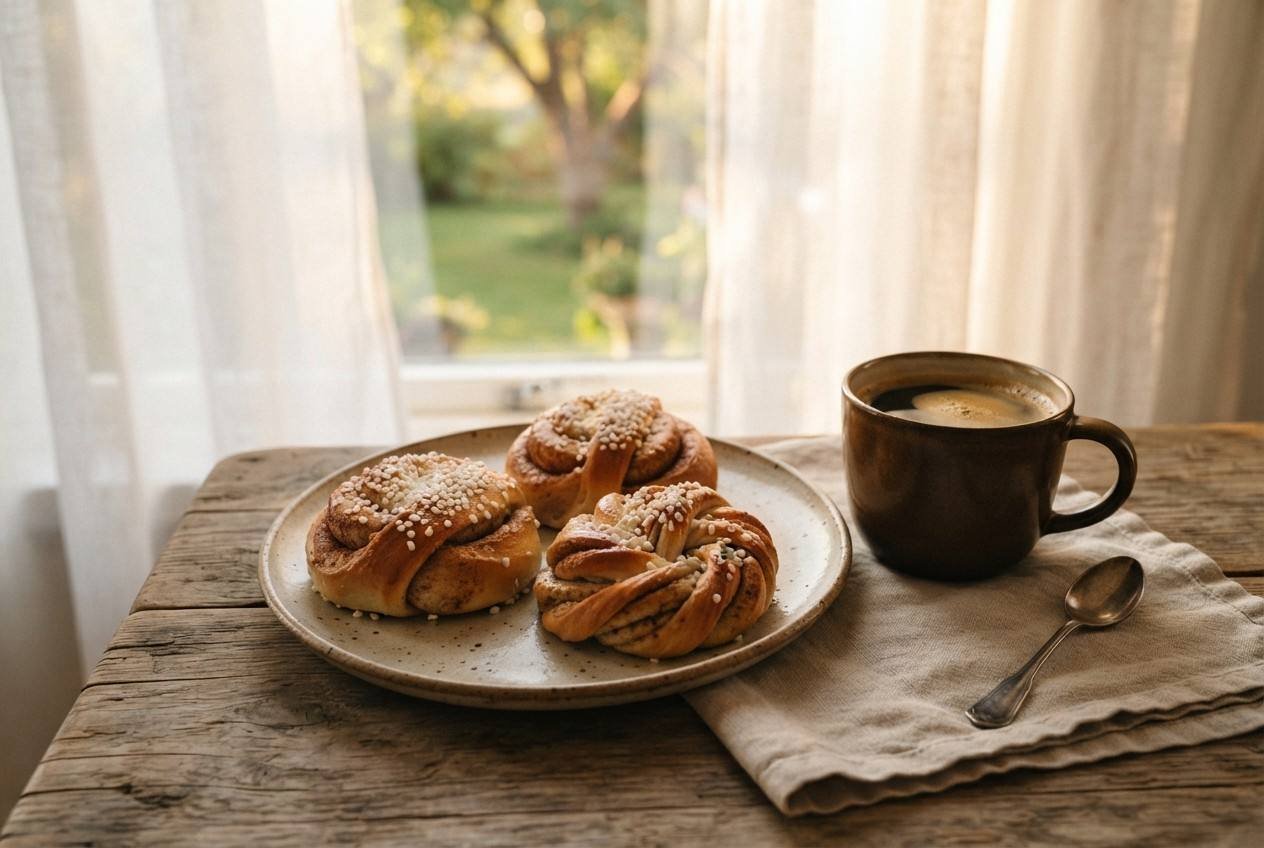
The cinnamon bun is the face of fika. Swedish versions use a cardamom-spiced dough, a buttery cinnamon filling and a sprinkle of pearl sugar. Sweden even celebrates Cinnamon Bun Day on October 4. The cardamom bun, kardemummabulle, is a close rival.
Semlor: the pre-Easter cream bun
A semla is a cardamom bun filled with almond paste and whipped cream. It is eaten around Shrove Tuesday, although bakeries now sell it for weeks beforehand.
Prinsesstårta and kladdkaka
Prinsesstårta, the green marzipan-covered layer cake, is the classic birthday cake. Kladdkaka is the opposite: a gooey, brownie-like chocolate cake that bakes in minutes and is perfect with cream.
Festive sweets: lussekatter, pepparkakor and waffles
- Lussekatter: saffron buns baked for St. Lucia on December 13.
- Pepparkakor: thin gingerbread cookies. Gingerbread has been baked at Vadstena monastery since 1444.
- Våfflor: heart-shaped waffles with jam and cream. Waffle Day falls on March 25.
- Ostkaka: a baked, cheesecake-like dessert served with jam and cream.
Swedish Drinks
- Coffee: filter coffee is the default, drunk all day.
- Milk: one survey found that 52% of Swedes drink milk daily, and shops sell it in several fat levels.
- Julmust: a spiced soft drink that replaces cola at Christmas.
- Glögg: warm spiced wine with almonds and raisins, served in winter.
- Snaps: a small glass of flavored spirit, often with a drinking song.
- Beer: folköl is a light beer sold in supermarkets, while stronger drinks come from the state-run Systembolaget stores.
The Swedish Food Calendar
Swedes eat by the calendar more than most. Each season and holiday has its own menu.
| When | Occasion | On the table |
|---|---|---|
| Every Thursday | Soup day | Pea soup, pancakes |
| Shrove Tuesday | Fettisdagen | Semlor |
| March 25 | Waffle Day | Waffles with jam and cream |
| Late June | Midsummer | New potatoes, herring, sour cream, strawberries |
| August | Crayfish parties | Boiled crayfish, bread, cheese pie |
| October 4 | Cinnamon Bun Day | Kanelbullar |
| December 13 | St. Lucia | Lussekatter, glögg, pepparkakor |
| December | Julbord | Ham, herring, meatballs, Janssons frestelse, julmust |
Good to knowCrayfish may be caught from July through October, which is why the kräftskiva season centers on late summer.
Smörgåsbord and julbord
The smörgåsbord is a buffet of cold and warm dishes, and the Christmas version is called julbord. Diners usually make several trips: herring first, then other cold fish, then cold cuts, then hot dishes, then dessert. Using a clean plate for each round is normal.
Swedish Dining Culture and Etiquette
- Be on time. Arriving late to a dinner invitation is considered rude.
- Take off your shoes at the door of a Swedish home.
- Make eye contact when toasting. Say skål and look at the person across from you.
- Thank the host afterward. A message the next day is common.
- Use the butter knife. The little wooden knife on a bread plate is for spreading, not for the main course.
- Pay by card. Tipping is modest and cash is rarely needed.
Lunch is the main restaurant meal for many Swedes. Most places serve dagens rätt (dish of the day), usually between about 10 a.m. and 3 p.m., and it often includes bread, salad and coffee. Friday is informally taco night, and Saturday is candy night (lördagsgodis).
Modern Swedish Food
Swedish cooking keeps evolving. Chefs now talk about nouvel husman, a modern take on home cooking that uses the same ingredients with lighter techniques. Vegetarian and vegan versions of meatballs and pytt i panna are easy to find, and foraged mushrooms, berries and herbs are a point of pride.
Foraging is possible thanks to allemansrätten, the public right of access. It lets people walk, camp and pick wild berries and mushrooms on most land, as long as they respect nature and private homes. Chanterelles, bilberries and lingonberries are the popular finds.
Visitor tipLook for restaurants advertising husmanskost or dagens for the most authentic and affordable traditional meals.
Where to Find Swedish Food Near You
Many people search for “Swedish food near me” or “Swedish food online.” These are the most reliable options:
- IKEA Swedish Food Market: meatballs, lingonberry jam, crispbread, cinnamon buns and other staples, found in the store’s food section.
- Scandinavian specialty shops: independent shops and bakeries often stock herring, crispbread, candy and baking ingredients such as pearl sugar.
- Online Swedish food stores: many ship pantry items worldwide. Check shipping rules for fish and dairy products.
- Restaurants and delivery: search for Scandinavian or Nordic restaurants, then check whether they list köttbullar or gravlax. Delivery options vary by city.
- Your own kitchen: most classics use ordinary ingredients, so cooking at home is often the easiest route.
Swedish Food Recipes to Try at Home
Easy Swedish meatballs
Ingredients
- 1 lb (500 g) mixed ground beef and pork
- ½ cup breadcrumbs soaked in ½ cup milk
- 1 small onion, finely grated
- 1 egg
- 1 tsp salt, ¼ tsp white pepper, pinch of allspice
- Butter for frying
Cream sauce
- 2 tbsp butter and 2 tbsp flour
- 1½ cups beef stock
- ½ cup cream, splash of soy sauce
Method
- Mix the soaked breadcrumbs with the onion, egg and seasoning, then add the meat and mix briefly.
- Roll small balls, about 1 inch wide.
- Fry in butter over medium heat for 8 to 10 minutes until browned and cooked through to 160°F (71°C).
- Melt butter, whisk in flour, then add stock slowly. Simmer for 5 minutes, add cream and soy sauce.
- Serve with potatoes, lingonberry jam and pickled cucumber.
Home-cured gravlax
Mix 3 tablespoons of salt, 3 tablespoons of sugar and 1 teaspoon of crushed white pepper. Rub the mix on a 1 lb (500 g) salmon fillet, cover with a large bunch of chopped dill, wrap tightly and refrigerate for 48 hours under a light weight, turning once. Slice thinly and serve with mustard sauce.
Food safetyUse very fresh, high-quality salmon sold for eating raw, and keep it cold throughout. Pregnant people and anyone with a weakened immune system should check with a doctor before eating cured fish.
Pytt i panna in 15 minutes
Dice boiled potatoes, onion and leftover meat or sausage. Fry in butter until crisp, season and top with a fried egg and pickled beetroot. It is the easiest Swedish dinner to improvise.
Swedish Food FAQ
- What is the national dish of Sweden?
- Sweden has no official national dish. Meatballs with potatoes and lingonberry jam are the most widely recognized, with pea soup and pancakes also considered classics.
- What do Swedes eat in a typical day?
- Breakfast is often open-faced sandwiches, yogurt or filmjölk with cereal, and coffee. Lunch is frequently dagens rätt. Dinner is usually husmanskost, such as meatballs, fish or sausage with potatoes. A fika break fits in somewhere between.
- What is fika in Sweden?
- Fika is a relaxed break for coffee or tea and a pastry, shared with friends or colleagues. Cinnamon buns and cardamom buns are the usual choices.
- Is Swedish food healthy?
- Much of it is built on fish, whole-grain rye, berries and dairy, which fit many balanced diets. Pastries, cream sauces and the weekend candy tradition are indulgent, so balance depends on how often they are eaten.
- Where can I buy Swedish food online or near me?
- Try the IKEA Swedish Food Market, Scandinavian specialty shops and online Swedish grocers. Check shipping and storage rules for fish and dairy products.
Conclusion
Swedish food is practical, seasonal and social. Husmanskost keeps weeknights simple, the calendar adds a feast for every season and fika gives each day a pause. Start with meatballs and a cinnamon bun, then work toward gravlax, pickled herring and a Midsummer table.
Whether the plan is a trip to Stockholm, a visit to the IKEA food market or a Thursday pea-soup experiment at home, the best way to learn Swedish food is to eat it with other people.