South African Food: A Delicious Guide to Dishes, Braai Culture & Street Eats
From smoky braai fires to Cape Malay curries, here is everything worth knowing about South Africa’s flavorful table.
South African food is a vibrant mix of Indigenous, Dutch, Malay, Indian, British and Portuguese traditions. It is hearty, spiced rather than fiery, and built around shared meals. This guide walks through the best-known dishes, the culture behind them, and simple ways to try them at home or at a restaurant.

What Is South African Food?
South Africa is often called the Rainbow Nation, and its kitchen shows why. The country has 11 official languages, and nearly as many food traditions shape what lands on the plate.
The cuisine grew in layers. Indigenous Khoisan and Bantu-speaking communities brought grains, game and slow cooking over fire. Dutch settlers added stews, preserved meats and baking. Enslaved people and political exiles from Southeast Asia, many of them Muslim, shaped what is now known as Cape Malay cooking. Indian laborers arrived in Natal and left a legacy of curries and spice blends.
Key influences at a glance
- Indigenous African: maize, sorghum, beans, wild greens, open-fire cooking
- Dutch & Afrikaner: biltong, rusks, braaivleis, sweet puddings
- Cape Malay: sweet-and-savory curries, apricot, turmeric, cinnamon
- Indian South African: masala blends, roti, bunny chow
- British: pies, tea, roast dinners
Traditional South African Dishes You Should Try
Many visitors ask where to start. This table covers the classics and shows how each one is usually eaten.
| Dish | What it is | Best paired with |
|---|---|---|
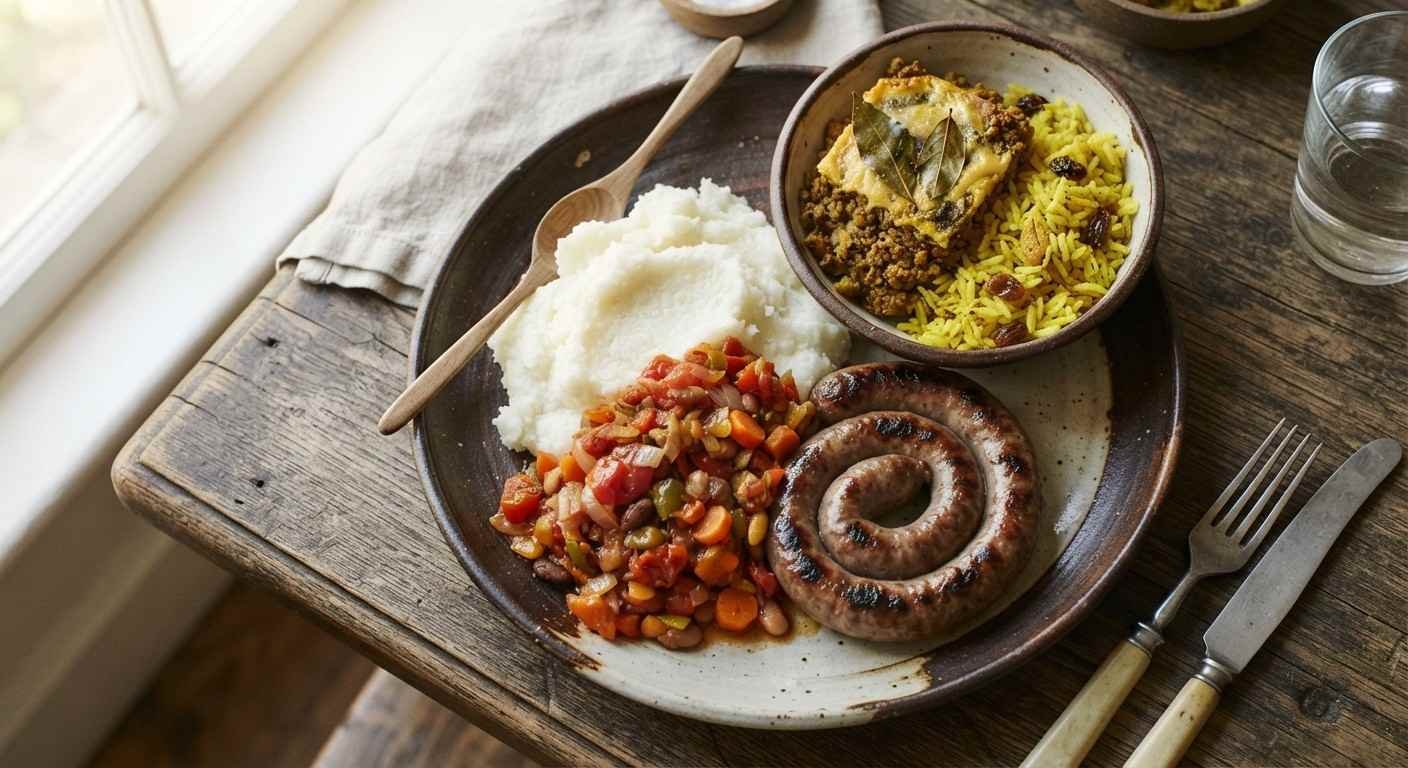
| Bobotie | Spiced minced meat baked with an egg custard topping | Yellow rice, chutney, sliced banana |
| Pap | Stiff maize porridge, a daily staple | Stews, braai meat, tomato-onion gravy |
| Boerewors | Coiled beef sausage with coriander and spices | Pap, bread roll, grilled onions |
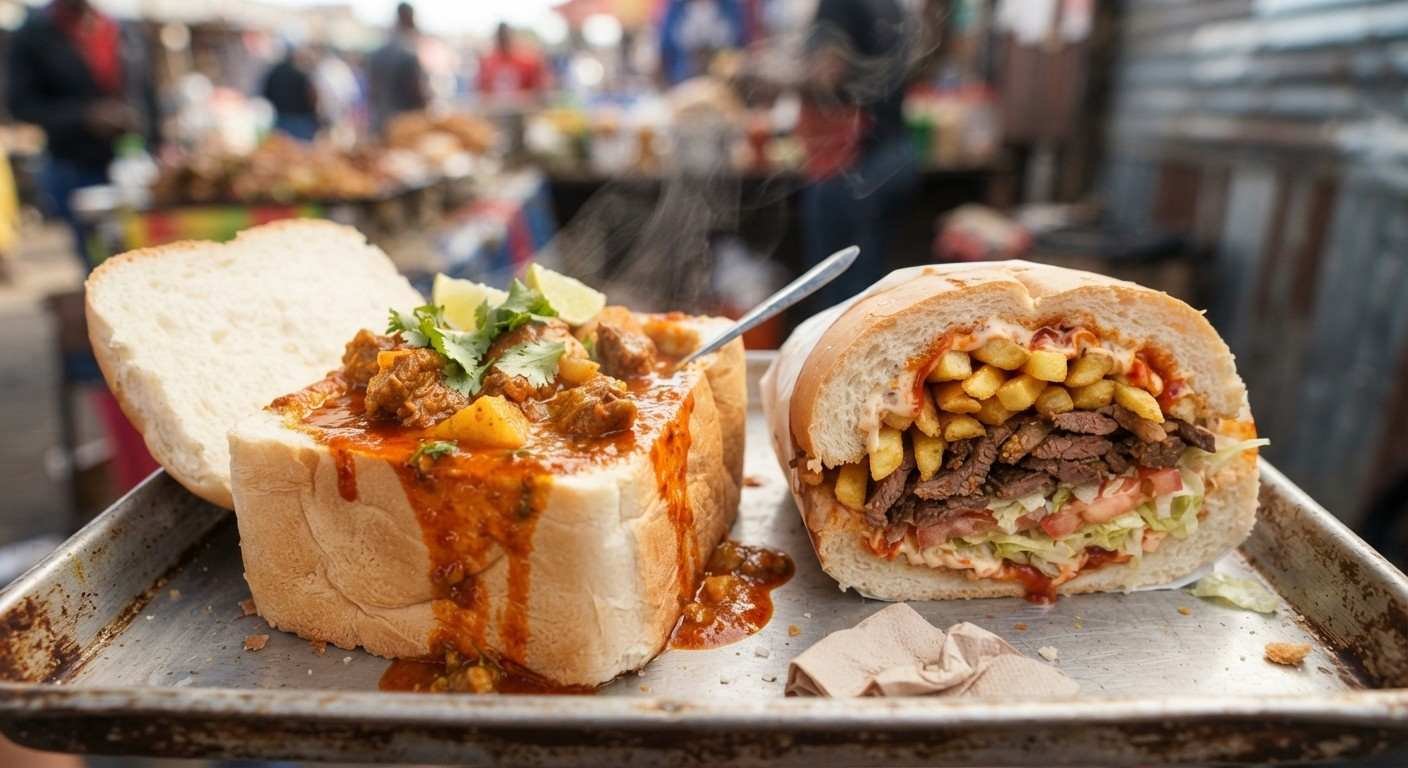
| Bunny chow | Hollowed bread loaf filled with curry | Sambals, pickled carrot salad |
| Biltong | Air-dried, spiced cured meat | Snacking, beer, road trips |
| Potjiekos | Layered stew cooked slowly in a three-legged pot | Crusty bread, rice |
| Umngqusho | Samp and beans, a Xhosa comfort dish | Beef stew, butter |
Bobotie: the national dish
Bobotie is widely considered the unofficial national dish. Minced meat is cooked with curry spices, dried fruit and a touch of vinegar, then topped with a golden egg-and-milk custard and baked. Bay leaves on top add a gentle fragrance.
Easy home tip
Add a spoonful of apricot jam and a few raisins for the signature sweet-savory balance.
Pap, chakalaka and the everyday plate
Pap is made from white maize meal and water. It can be soft like porridge (slap pap) or firm enough to shape (stywe pap). It is usually served with chakalaka, a spicy relish of tomatoes, carrots, beans and peppers. The pairing is so common that “pap en vleis” (pap and meat) works almost like a national shorthand for dinner.
Boerewors and biltong
Boerewors, meaning “farmer’s sausage,” is made of coarsely minced beef, sometimes mixed with pork or lamb, and seasoned with coriander and cloves. South African regulations set a minimum meat content for it, so it is known for being meaty rather than filler-heavy. Biltong, the cured cousin of jerky, is thicker, spiced with coriander and vinegar, and sold everywhere from supermarkets to roadside stalls.
Potjiekos and slow-cooked comfort
Potjiekos (“small pot food”) is a social dish. Meat is browned first, then vegetables are layered on top and left to simmer for hours without stirring. It is a weekend tradition and an excellent choice for groups.
Braai Culture: More Than Barbecue
The braai is a social ritual, not just a cooking method. Friends and family gather around a fire, share drinks and cook over wood or charcoal for hours. September 24, officially Heritage Day, is informally called National Braai Day.
Typical braai menu
- Boerewors coils and lamb chops
- Sosaties: marinated kebabs, often with apricot and curry
- Chicken pieces basted in peri-peri or chutney glaze
- Braaibroodjie: grilled cheese, tomato and onion sandwich
- Pap and chakalaka on the side
South African Street Food
Bunny chow
This Durban icon is a hollowed quarter or half loaf of white bread stuffed with bean, chicken or mutton curry. It is eaten by hand, using the bread “lid” to scoop. Its origins are linked to the Indian South African community, and it remains one of the best-loved fast foods in the country.
The Gatsby
The Gatsby is a long sandwich roll piled with chips (fries), meat, egg or masala steak and sauce. It is commonly traced to Cape Town in the 1970s and is designed for sharing, often cut into portions.
Vetkoek and kota
Vetkoek are deep-fried dough balls, often filled with mince or jam. In Gauteng townships, the kota (or “spatlo”) is a quarter loaf filled with chips, polony, cheese and atchar.
Desserts, Baking and Sweet Treats
- Malva pudding: a spongy, caramelized apricot-jam pudding soaked in warm cream sauce
- Melktert: milk tart with cinnamon, a tea-time favorite
- Koeksisters: Afrikaner ones are braided and syrup-soaked; Cape Malay koesisters are spiced, coconut-rolled dough balls
- Rusks: twice-baked dunking biscuits for morning coffee
- Hertzoggies: jam tartlets with coconut meringue
For a beginner, malva pudding with custard is the safest and most rewarding place to start.
Traditional Drinks
- Rooibos tea: caffeine-free, grown in the Cederberg region
- Amarula: cream liqueur made from marula fruit
- South African wine: Pinotage, Chenin Blanc and Cape blends from Stellenbosch and Paarl
- Ginger beer and Creme Soda: sweet local soft drinks
Regional Flavors Across South Africa
Cape Town and the Western Cape
Expect Cape Malay curries, pickled fish, seafood, snoek on the braai and wine-country dining.
Durban and KwaZulu-Natal
Durban is the home of bunny chow and fiery masala dishes thanks to its large Indian South African community.
Gauteng (Johannesburg and Pretoria)
This is the hub for kasi (township) cooking, shisanyama braai spots and kotas.
Eastern Cape
Home to Xhosa classics like umngqusho and umphokoqo (crumbly pap with sour milk).
Halal, Vegan and Gluten-Free South African Food
Cape Malay cooking is traditionally halal, so many curries, samosas and koesisters suit Muslim diners. Readers who want to compare halal options across cuisines can browse the halal food guide.
Plant-based eaters have more choices than expected: pap with chakalaka, bean stews, vegetable bunny chow, butternut soup and cabbage-based salads. Maize-based dishes are naturally gluten-free, though sauces and breads need checking. See this vegan and gluten-free dining guide for useful ordering habits that apply to any restaurant.
Where to Find South African Food (Near You or at Home)
Outside South Africa, dedicated restaurants are still rare, so planning helps.
- Search smart: try “South African food near me,” “braai,” “bunny chow” or “boerewors.”
- Visit specialty shops: many cities have import stores selling biltong, rusks and spice blends.
- Order in: compare options in this delivery and takeout guide.
- Watch your budget: street-style dishes are usually affordable; see these top-rated cheap eats for money-saving dining ideas.
Curious about other cuisines? The main food directory and the food blog cover more dishes and dining tips.
Practical Tips for Trying South African Food
- Start with a mixed plate: pap, boerewors and chakalaka.
- Ask for sauce on the side if spice is a worry.
- Order a bunny chow to share; portions are large.
- Finish with malva pudding.
- Pair meals with rooibos or a Cape wine.
Cooking at home? Keep a short pantry: maize meal, curry powder, chutney, coriander seed, apricot jam and mild chili. These cover most classic recipes.
Frequently Asked Questions
What is the most popular South African food?
Braai meat with pap, boerewors and bobotie are widely seen as the most iconic choices.
What is a traditional South African meal?
Pap with a meat stew or grilled meat and a tomato relish or chakalaka is the classic everyday meal.
Is South African food spicy?
Mostly no. It is flavorful rather than hot. Durban curries and peri-peri dishes are the main exceptions.
What is bunny chow made of?
A hollowed loaf of bread filled with curry, often chicken, mutton or beans.
What desserts is South Africa known for?
Malva pudding, melktert and koeksisters are the best-known.
Conclusion
South African food rewards curiosity. Its best dishes, from bobotie and boerewors to bunny chow and malva pudding, tell stories of many cultures meeting around one fire. Start with a few simple plates, share them with friends and let the flavors lead the way.