Fly Eggs on Food: What They Look Like, Whether They’re Safe, and What to Do Next
A clear, practical guide for anyone who has spotted tiny white specks on a meal and wondered if they are fly eggs.
Fly eggs on food look like tiny white or cream-colored specks, roughly 0.5 to 2 mm long, often stuck together in small clusters. If food has visible eggs or maggots, the safest move is to throw it away. Heat to 165°F (74°C) kills the eggs, but it does not undo the bacteria flies leave behind.
It usually happens in a quiet moment. Someone leaves a plate of rice on the counter, or a bowl of fruit sits a little too long, and later a cluster of pale specks appears. The next question is almost always the same: are these fly eggs, and is the food ruined?
This guide answers both, using plain language and food safety guidance from public health agencies. It also covers how to tell fly eggs from things that only look similar, because a surprising number of “fly egg” scares turn out to be something else.
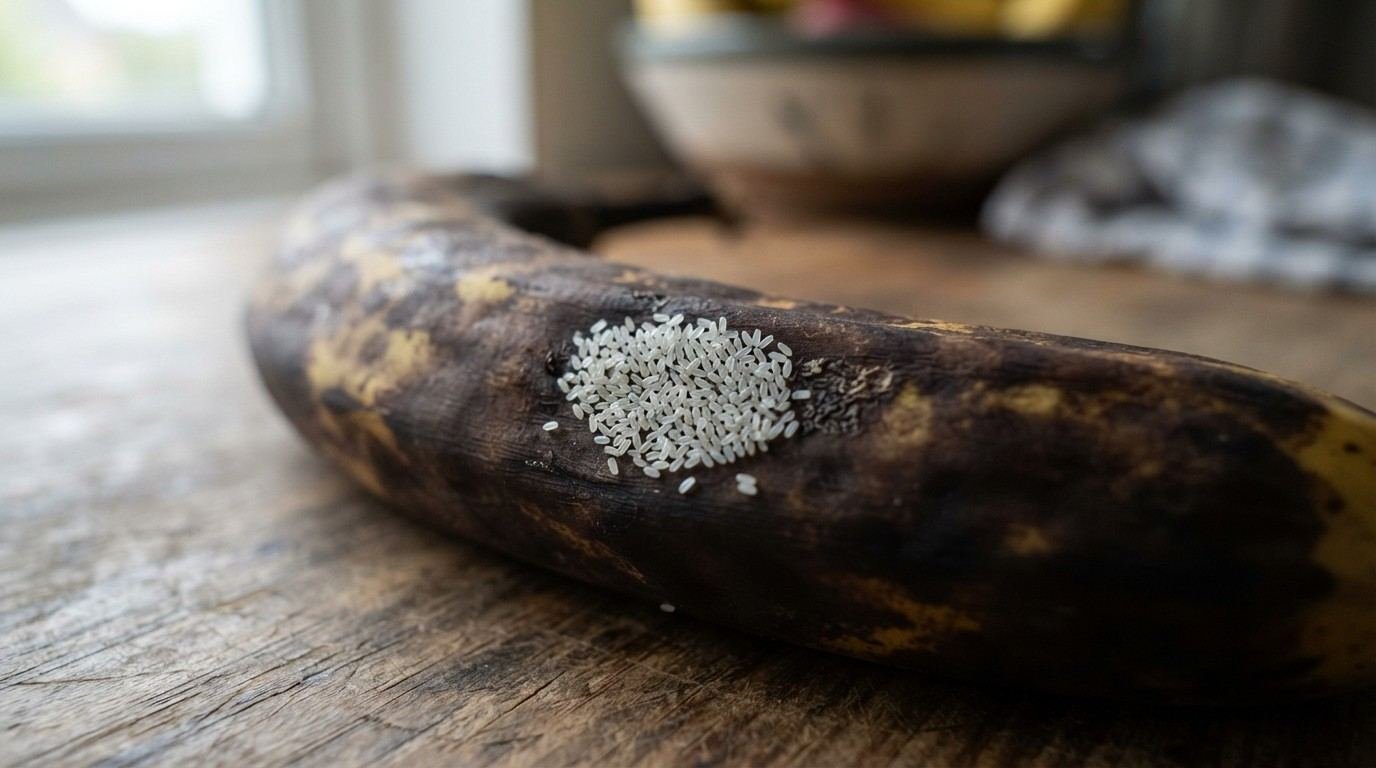
What Do Fly Eggs on Food Look Like?
Fly eggs are small, smooth, and pale. Most are white to cream, and they often resemble tiny grains of rice. The details change a little with the type of fly, which matters because each species prefers different food.
House Fly Eggs on Food
House fly eggs are white, slightly curved, and about the size of a grain of rice in miniature. They are usually laid in clumps of dozens, which makes them look like a small white patch rather than a few scattered dots. House flies favor moist, decaying material, so eggs tend to show up on spoiled meat, pet food, garbage, and food left out for hours.
Fruit Fly Eggs on Food
Fruit fly eggs are much smaller, around half a millimeter, and each one has two thin filaments at one end. They are very hard to spot with the naked eye unless the food is dark or the light is good. The most common fruit fly eggs on food appear on ripe or overripe fruit, in open wine or juice, and around fermenting spills.
According to extension entomology programs, a single female fruit fly can lay several hundred eggs in her short life, which is why one forgotten banana can turn into a kitchen problem within a week.
Blowfly and Flesh Fly Eggs on Food
Blowflies (often called bottle flies) lay slightly larger white eggs, roughly 1.5 to 2 mm, mostly on raw meat, fish, and pet food. Flesh flies sometimes deposit tiny live larvae instead of eggs. If maggots appear within hours on meat, blowflies are the usual cause.
Quick Comparison Table
| Fly type | Egg size | Appearance | Usual foods |
|---|---|---|---|
| Fruit fly | ~0.5 mm | White, tiny, two filaments | Ripe fruit, juice, fermenting spills |
| House fly | ~1.2 mm | White, banana-shaped clumps | Cooked leftovers, garbage, pet food |
| Blowfly | ~1.5–2 mm | Creamy white, laid in masses | Raw meat, fish, pet food |
What Else Could It Be? Common Fly Egg Look-Alikes
Many “fly eggs on food” discoveries turn out to be harmless. Before panicking, check these common look-alikes.
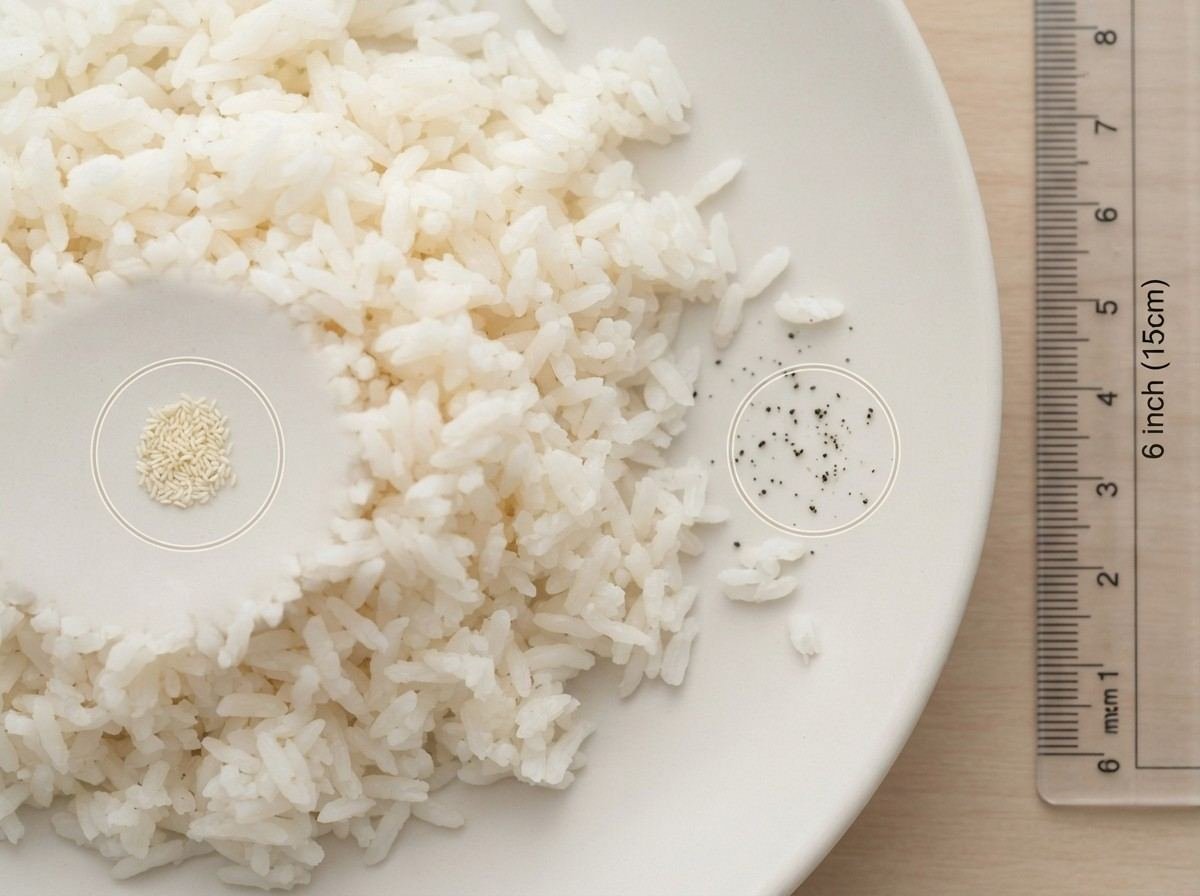
- Flyspecks: Tiny dark dots left by fly feces or regurgitated droplets. They are often mistaken for pepper, which is why black dots on rice or bread frighten people. Flyspecks are a sign a fly visited, not that eggs were laid.
- Seasoning and seeds: Sesame, poppy seeds, ground pepper, and dried herbs can all look suspicious.
- Fat or starch droplets: White, glossy beads on cooled gravy or soup are often congealed fat.
- Early mold: Fuzzy or powdery white patches are mold, not eggs. Eggs are smooth and distinct.
- Cheese crystals or salt: Aged cheese often has white crunchy crystals that are completely normal.
- Pantry moth or weevil larvae: In dry goods such as flour and rice, tiny pale worms are usually pantry pests rather than flies.
The 10-second test
Touch a speck with a clean toothpick. Eggs are soft and cling together in clusters. Seeds and pepper are hard and move individually. If the speck is moving, it is a larva or an insect, not an egg.
Why Flies Lay Eggs on Food (And Which Foods They Love)
Flies do not lay eggs on food because it is tasty to them. They lay eggs where newly hatched larvae will have an immediate meal. That is why flies seek out moist, protein-rich, or sugary material.
Foods most often targeted
- Overripe fruit and vegetables (bananas, mangoes, tomatoes, melons)
- Raw or cooked meat and fish left uncovered
- Cooked rice, pasta, and gravy dishes on the counter
- Pizza and takeout left open in warm rooms
- Pet food and the bowls around it
- Sweet drinks, juice, and wine that sit open
- Compost, garbage, and drain gunk near the kitchen
How Fast Do Fly Eggs Hatch?
Quickly. That is the main reason time matters so much with food left out.
- Eggs: hatch in about 8 to 24 hours in warm conditions.
- Larvae (maggots): feed and grow for roughly 3 to 7 days.
- Pupae: develop over about 3 to 6 days.
- Adults: emerge and can start laying eggs within days.
A house fly can complete its life cycle in about 7 to 14 days in warm weather, and fruit flies often finish in about 10 days at room temperature. Because of this, one overlooked egg cluster can become a full infestation in about a week and a half.

Is It Safe to Eat Food With Fly Eggs on It?
The short answer is no, you should not eat it on purpose. The eggs themselves are rarely the problem. The surface they were laid on is.
What Happens If You Eat Fly Eggs on Food?
For most healthy adults, swallowing a few fly eggs causes no symptoms. Stomach acid and digestive enzymes typically break them down. Many people accidentally eat tiny insect fragments every year without noticing, and regulators even set “defect action levels” for how much insect material is acceptable in certain foods.
The Real Risk: Bacteria and Germs
Flies feed on garbage, animal waste, and decay. Studies and public health sources have linked house flies to carrying more than 100 kinds of pathogens, including Salmonella, E. coli, and Shigella. A fly that lands on food can transfer these germs through its legs, mouth, and droppings.
That means if fly eggs are present, bacteria are probably present too. Possible symptoms of foodborne illness include:
- Nausea and vomiting
- Stomach cramps
- Diarrhea
- Mild fever
Who is at higher risk?
- Infants and young children
- Pregnant women
- Adults over 65
- People with weakened immune systems
What About Maggots and Intestinal Myiasis?
If eggs hatch and live larvae are swallowed, intestinal myiasis is possible, although it is considered rare. Symptoms can include abdominal pain, nausea, and sometimes larvae seen in stool. Most cases are mild, but medical advice is sensible.
Can Heat Kill Fly Eggs on Food?
Yes. Fly eggs are not heat resistant. Heating food to an internal temperature of 165°F (74°C), the USDA’s recommended temperature for leftovers, kills eggs and most bacteria.
There is a catch, however. Some bacteria produce toxins that survive cooking. In addition, food that has been sitting out in the “danger zone” between 40°F and 140°F (4°C to 60°C) for more than two hours (one hour above 90°F / 32°C) should be discarded no matter how well it is reheated.
Keep or Toss? A Simple Decision Guide
| Situation | Verdict | Why |
|---|---|---|
| Eggs or maggots on cooked leftovers, meat, fish, or dairy | Throw away | Soft, moist foods let bacteria spread throughout, not just on the surface. |
| Eggs on soup, stew, sauces, or sweet drinks | Throw away | Contamination is impossible to separate from the liquid. |
| Eggs on a whole fruit with thick, intact skin | Wash well, or discard | Peeling can remove surface contamination, but any soft spot means discard. |
| Only a few tiny fruit fly eggs on a firm, fresh fruit | Cut away generously | Remove a wide margin, then wash. When in doubt, throw it out. |
| Dark dots that may be flyspecks on bread or rice | Throw away | A fly was present, which means germs were too. |
| Sealed, unopened packaged food | Usually safe | Check for holes or damaged packaging first. |
What to Do Right Now if You Find Fly Eggs on Food
- Stop eating. Put the food down and do not taste to “test” it.
- Photograph it if you want to identify the pest or report a store or restaurant problem.
- Seal the food in a bag before it goes into the bin, so adult flies cannot reach it.
- Take out the trash and rinse the bin if it looks dirty.
- Clean the area with hot, soapy water, then a food-safe sanitizer.
- Check nearby food for eggs, especially fruit, bread, and open containers.
- Wash your hands and the dishes that touched the food.
How to Get Rid of Fly Eggs and Flies in the Kitchen
- Pour boiling water down the sink drain to clear egg-laying film.
- Wipe sticky spills, juice rings, and crumbs daily.
- Set a small bowl of apple cider vinegar with a drop of dish soap to trap fruit flies.
- Use sticky traps or a UV light trap near entryways if the problem persists.
- Repair torn screens and gaps around doors and windows.
How to Prevent Fly Eggs on Food
Prevention is easier than cleanup. The goal is simple: make food unreachable and the kitchen unattractive.
- Cover everything. Food covers, lids, and mesh domes work well for buffets and picnics.
- Refrigerate quickly. Put leftovers away within two hours.
- Store ripe fruit in the fridge, or in sealed containers, especially in summer.
- Use bins with tight lids and take garbage out daily.
- Rinse recyclables such as juice and soda containers.
- Wash pet bowls and do not leave pet food out overnight.
- Keep compost sealed or outside, away from the kitchen door.
When to See a Doctor
Most mild stomach upsets pass within a day or two. Contact a doctor if any of the following occur:
- Vomiting or diarrhea lasting more than 48 hours
- Blood in the stool
- High fever or signs of dehydration (dizziness, very dark urine, dry mouth)
- Visible larvae in stool or vomit
- Symptoms in an infant, a pregnant woman, or an immunocompromised person
Frequently Asked Questions About Fly Eggs on Food
Can you see fly eggs on food?
What happens if you eat fly eggs on food?
Can heat kill fly eggs on food?
How long do fly eggs take to hatch?
How do you get rid of fly eggs on food?
Conclusion
Fly eggs on food are small, pale, and easy to miss, but they signal that a fly has been there, and flies carry germs. The eggs themselves rarely harm healthy people. The contamination around them is the real problem.
Remember the essentials: learn to tell fly eggs from look-alikes such as flyspecks and seeds, discard soft or cooked foods that show eggs, and rely on cold storage, covers, and a clean kitchen to keep flies away in the first place. When in doubt, throw it out.
SEO Toolkit (remove before publishing)
Step 1 · Keyword & competitor analysis
Main keyword: fly eggs on food (>1,000 monthly searches, KD “Easy”, per your Ahrefs data).
Secondary / NLP keywords used: fruit fly eggs on food, house fly eggs on food, what happens if you eat fly eggs on food, can heat kill fly eggs on food, how to get rid of fly eggs on food, fly eggs on food look like, fly eggs on food safe to eat, fly eggs on food dangerous, maggots, flyspecks, myiasis, food safety.
Competitor note: this analysis is inferred from the URL slugs and titles you supplied (Reddit, YouTube, HealthAndMe, Hastings, Quora) and from the Ahrefs keyword list. I did not open those pages, so confirm details before relying on it.
| Competitor | Format | Likely strength | Gap this article fills |
|---|---|---|---|
| Reddit r/biology | Photo ID thread | Real photos, expert replies | No structured, repeatable identification method |
| YouTube | Video | Visual proof | Not scannable, no text answers or safety guidance |
| HealthAndMe | Health article | Fruit fly focus, eating effects | Little on look-alikes, decision guidance, prevention |
| Hastings (image page) | Image page | Matches image intent | Thin text and context |
| Quora | Q&A | Matches “black dots on rice” intent | Mixed answer quality, no authority sources |
Search intent: primarily informational (identify and understand), with a strong safety/decision layer (“is it safe to eat?”). Keyword gaps worth targeting: fly eggs on food close up / macro (use images), pizza fly eggs on food, what do fly eggs on food look like.
Step 2 · Outline used
- H1 Fly Eggs on Food: What They Look Like, Whether They’re Safe, and What to Do Next
- H2 What Do Fly Eggs on Food Look Like? → H3 House fly / Fruit fly / Blowfly & flesh fly / Comparison table
- H2 Common Look-Alikes → H4 The 10-second test
- H2 Why Flies Lay Eggs on Food → H3 Foods most often targeted
- H2 How Fast Do Fly Eggs Hatch?
- H2 Is It Safe to Eat? → H3 What happens / Real risk / Myiasis → H4 Who is at higher risk
- H2 Can Heat Kill Fly Eggs?
- H2 Keep or Toss decision guide
- H2 What to Do Right Now → H3 Getting rid of flies
- H2 Prevention · H2 When to See a Doctor · H2 FAQ · H2 Conclusion
Step 4 · On-page SEO
SEO title (49 chars): Fly Eggs on Food: Identify, Risks & What to Do
Meta description (155 chars): Found fly eggs on food? Learn what they look like, if they're safe to eat, whether cooking kills them, and exactly what to do next.
URL slug: /fly-eggs-on-food/
Internal link ideas:
- How to get rid of fruit flies in the kitchen
- Food safety danger zone: how long can food sit out?
- How to store fruit so it lasts longer
- Signs of food poisoning and when to worry
- Pantry pests: how to identify weevils and moths
External authority links to add (verify the current URLs before publishing):
- USDA Food Safety and Inspection Service: “Danger Zone (40°F–140°F)” and leftovers guidance
- CDC: foodborne illness symptoms and prevention
- FDA: Food Defect Action Levels handbook
- A university extension or UC IPM page on fruit fly and house fly biology
- CDC DPDx or a medical source on myiasis
Image suggestions (use original photos where possible):
- Macro photo of fruit fly eggs on a banana (alt: “fruit fly eggs on food close up”)
- House fly egg cluster on cooked rice beside a ruler for scale
- Flyspecks vs. pepper side-by-side comparison
- Infographic: fly life cycle from egg to adult
- Photo of a food cover and a vinegar fly trap for the prevention section
E-E-A-T boosters: add an author bio with food-safety or pest-control credentials, a “medically/expert reviewed by” line, your own photos, and dated sources. The FAQ above already includes FAQPage schema in the page head.