Bone Marrow Food: Benefits, Nutrition & How to Cook It
What bone marrow food really is, what it offers nutritionally, who should be careful, and how to roast it at home like a restaurant chef.
Bone marrow food has gone from a humble kitchen byproduct to a menu star. Steakhouses serve it with toast, butchers sell it in neat “canoe” cuts, and wellness fans praise it as a nutrient-dense fat. Yet many people still ask the same basic questions: what is it, is it healthy, and how is it cooked without a mess?
This guide answers all of that in plain language. It covers nutrition, possible benefits, real risks, buying tips and a simple roasted recipe, so readers can decide whether bone marrow deserves a spot on the plate.
What Is Bone Marrow Food?
Bone marrow is the spongy or fatty tissue inside the hollow center of bones. In the body, it has an important job: it helps make blood cells and stores fat. In the kitchen, it is valued for its silky texture and deep, savory flavor.
People have eaten marrow for a very long time. Archaeologists have found evidence that early humans cracked open bones to reach it, and it still appears in cuisines across Europe, Asia and the Americas today.
Red marrow vs. yellow marrow
Not all marrow is the same. The two main kinds look and taste different.
| Feature | Red marrow | Yellow marrow |
|---|---|---|
| Main role | Produces blood cells | Stores fat and energy |
| Where found | Flat bones, ribs, vertebrae, ends of long bones | Center of long bones such as the femur |
| Fat content | Lower | Very high |
| Culinary use | Rarely eaten on its own; flavors stocks | The classic “roasted bone marrow” dish |
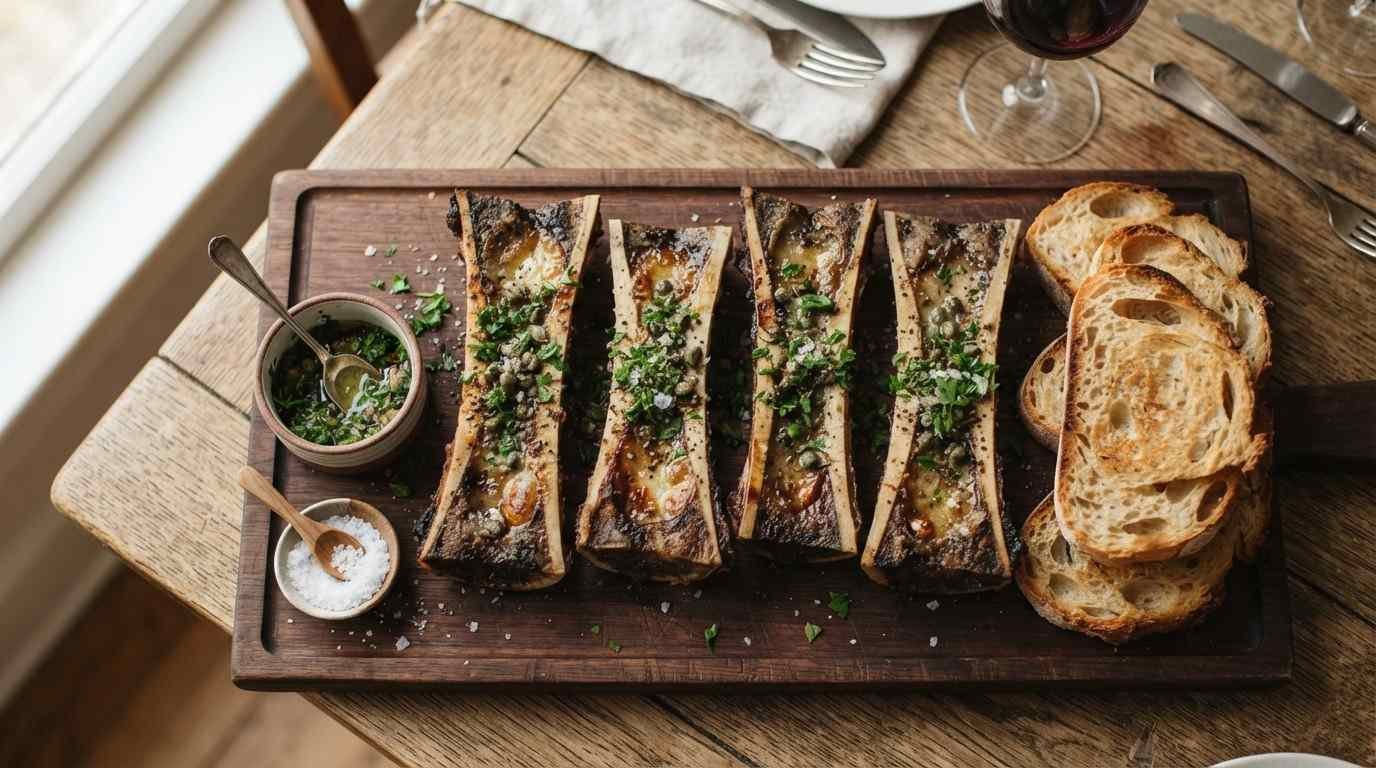
Types of Marrow and Common Sources
When people search for “bone marrow food,” they usually mean beef marrow. It is the easiest to find and has the mildest, creamiest flavor. Other animals are eaten too.
Beef
The standard choice. Femur bones give large, generous portions of marrow.
Veal
Milder and more delicate. Popular in classic French and Italian cooking, including osso buco.
Lamb & goat
Stronger flavor. Common in Middle Eastern, South Asian and North African dishes.
Pork & bison
Less common, but available from specialty butchers.
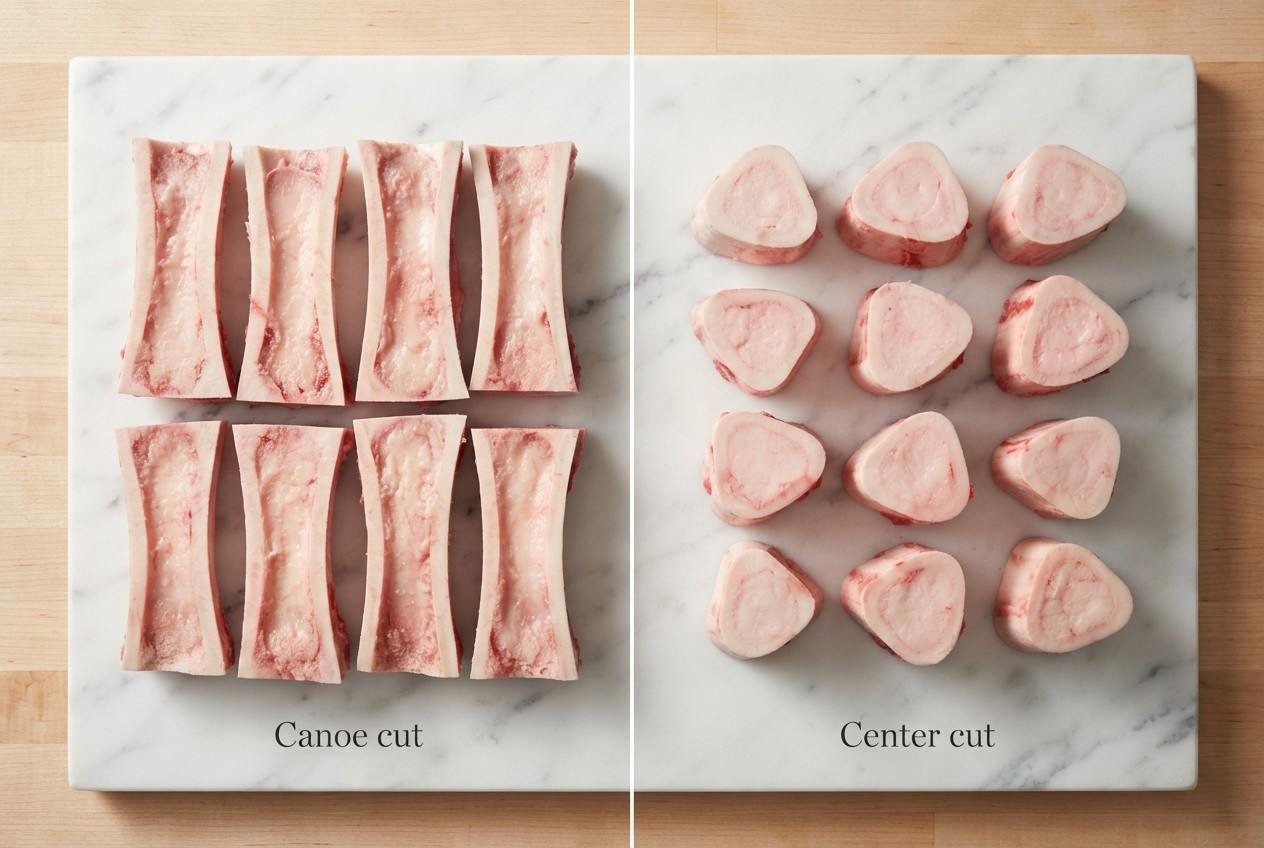
Cuts you will see at the butcher
- Canoe cut: a bone split lengthwise so the marrow is exposed. Best for roasting and scooping.
- Center cut (or cross-cut): round pieces about 2 to 3 inches long. Good for stocks and soups.
- Whole knuckle or femur bones: usually used for broth, not for serving at the table.
Bone Marrow Nutrition Facts
Bone marrow is mostly fat. That is why it melts so easily and tastes so rich. Exact numbers vary by animal, bone and cooking method, but the general picture is consistent.
| Nutrient (approx., beef marrow) | What to know |
|---|---|
| Calories | Very high. Roughly 750 to 800 calories per 100 g, according to common food databases. |
| Fat | The vast majority of the weight. A mix of saturated and monounsaturated fat. |
| Protein | Low, a small fraction of the total. |
| Carbohydrates | Almost none. |
| Vitamins and minerals | Small amounts of iron, zinc, selenium, vitamin B12 and riboflavin. |
| Other compounds | Collagen-related proteins and some conjugated linoleic acid (CLA). |
Possible Health Benefits of Bone Marrow
Online, bone marrow is often described as a “superfood.” The reality is more modest. Most research looks at specific nutrients, bone broth or animal studies, not marrow eaten as a whole food. Here is what is reasonable to say.
1. A concentrated source of energy
Marrow is packed with fat, so it provides lots of energy in a small portion. That makes it useful for active people or those following high-fat diets, though it must fit within overall calorie and saturated fat limits.
2. Contains useful micronutrients
Marrow contains iron, zinc, B vitamins and selenium. These support red blood cell formation, immune function and energy metabolism. The amounts in a single serving are helpful but not huge, so marrow should not replace a varied diet.
3. May offer collagen-related compounds
Marrow and the bones around it are linked to collagen, glycine and other proteins. Some small studies on collagen supplements suggest possible benefits for skin and joints. It is not yet clear that eating marrow gives the same result.
4. Provides monounsaturated fat
A portion of marrow fat is monounsaturated, the same type found in olive oil. This is a point in its favor, but it does not cancel out the saturated fat content.
5. Adds satisfaction and flavor
This benefit is practical. A small amount of marrow can make vegetables, soups and grains taste richer, which helps some people enjoy simple, home-cooked meals.
Risks and Who Should Be Careful
Good information includes the downsides. Bone marrow is not right for everyone.
- High saturated fat and calories: Large or frequent servings can raise LDL cholesterol in some people.
- Heart disease or high cholesterol: People with these conditions should ask their doctor or dietitian before adding marrow to their diet.
- Gout: Animal-based foods can contribute to purines. Anyone with gout should seek medical advice.
- Weight management: Marrow is calorie-dense, so portions matter.
- Food safety: Raw or undercooked meat products can carry bacteria. Cook marrow thoroughly and refrigerate leftovers quickly.
- Sourcing concerns: Choose bones from reputable butchers. Grass-fed and pasture-raised options are often preferred by shoppers who want higher-quality sourcing.
Where to Buy Bone Marrow and How to Choose It
Searches like “bone marrow food near me” and “where to buy bone marrow” are common, and the answer is easier than most people expect.
Best places to buy
- Local butchers: Usually the best option. They can cut bones to the size you want.
- Supermarket meat counters: Many carry them, often in the frozen section or behind the counter.
- Ethnic markets: Latin American, Asian and Middle Eastern grocers often stock marrow bones at low prices.
- Online butchers: Convenient for premium or grass-fed options, delivered frozen.
What to look for
- Bones with creamy white to pale pink marrow, not gray or dried out.
- Even, clean cuts so the bones roast uniformly.
- Size that matches the plan: canoe cuts for serving, center cuts for broth.
Prices vary by region, quality and cut. Bones are usually sold by weight and are generally among the cheaper beef items, while specialty or grass-fed bones cost more.
How to Cook Bone Marrow
Roasting is the simplest and most popular method. It takes about 30 minutes in total and needs very little equipment.
Simple roasted bone marrow (serves 2 to 4 as a starter)
Ingredients
- 4 to 6 canoe-cut beef marrow bones (about 2 to 3 inches long)
- Flaky sea salt and freshly ground black pepper
- 1 small bunch flat-leaf parsley, chopped
- 1 tablespoon capers and a squeeze of lemon juice
- Thick slices of toasted sourdough or baguette
Instructions
- Prep the bones. Soak them in salted cold water in the fridge for 12 to 24 hours if possible. This draws out blood and gives a cleaner flavor. Pat dry.
- Heat the oven. Preheat to 450°F (230°C).
- Arrange. Place bones cut-side up on a baking sheet lined with foil. Season lightly with salt and pepper.
- Roast for 15 to 25 minutes. The marrow should be soft, warm and slightly bubbling at the edges. Pull it out before it melts away completely.
- Make the parsley salad. Toss parsley, capers and lemon juice together. The acidity cuts through the richness.
- Serve right away. Scoop out the marrow with a small spoon and spread it on warm toast. Top with parsley salad and a pinch of flaky salt.
- Stand bones upright in a muffin tin or on crumpled foil so they do not tip.
- Use thicker bones for longer roasting and thinner ones for shorter times.
- Overcooking melts the marrow into the pan. If that happens, save the fat and use it for roasting potatoes.
Other ways to use bone marrow
- Bone broth and stock: Simmer center-cut bones for several hours for a rich base.
- Marrow butter: Mix soft roasted marrow with butter, garlic and herbs. Melt it over steak.
- Sauces: A classic bordelaise uses marrow for glossy richness.
- Grilling: Place bones on a medium grill for about 15 minutes.
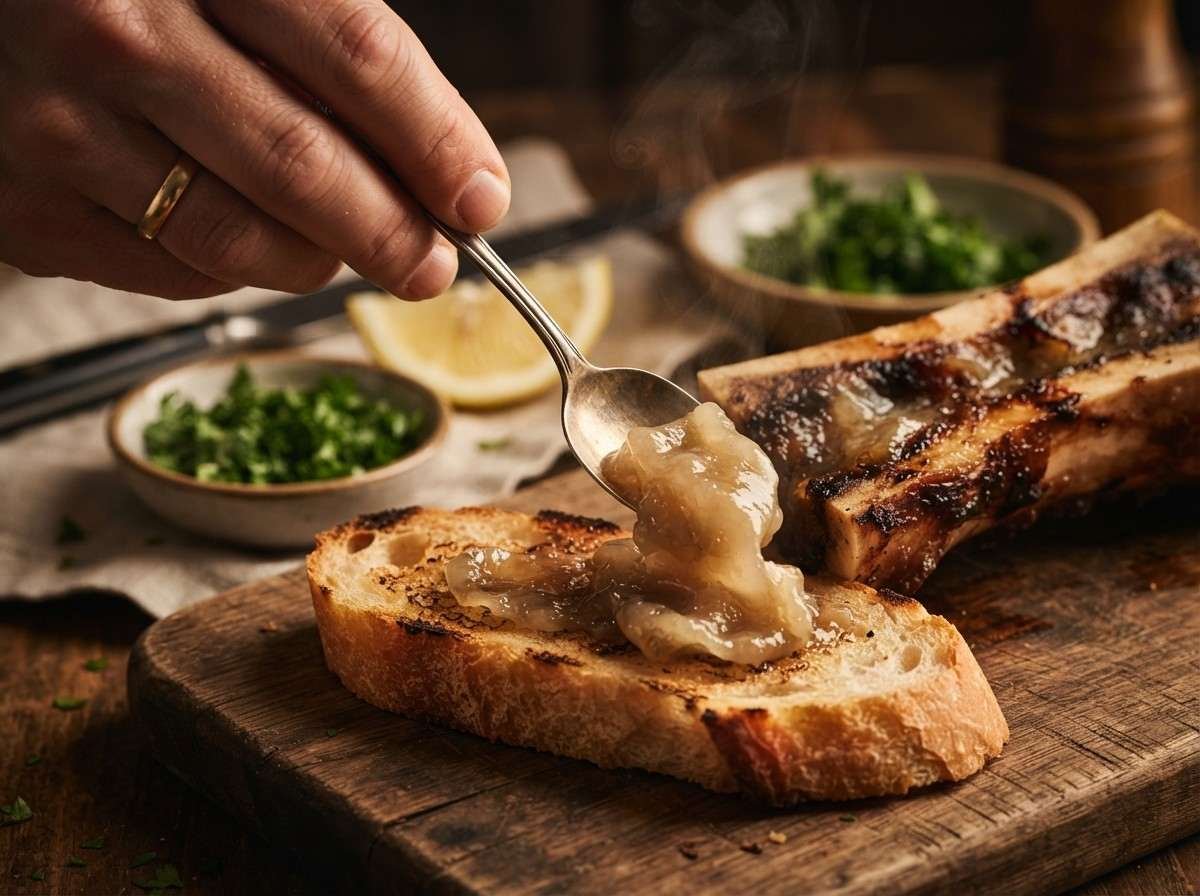
Serving Ideas and Flavor Pairings
Marrow is very rich, so it works best with sharp, fresh or crunchy partners.
Bright & acidic
Lemon, capers, pickled shallots, cornichons, vinegar-dressed salads.
Fresh herbs
Parsley, chives, thyme, tarragon.
Crunch
Toasted bread, crostini, crispy shallots, breadcrumbs.
Drinks
Dry red wine, crisp white wine, or sparkling water with lemon.
Bone Marrow Around the World
Bone marrow food shows up in many food traditions, which is a good sign of how timeless it is.
- France: Os à moelle is a bistro classic, served with toast and coarse salt.
- Italy: Osso buco features braised veal shank with marrow in the center.
- Germany: Marrow dumplings (Markklößchen) float in clear soups.
- Vietnam: Marrow bones enrich bò kho stew and pho broth.
- India and Pakistan: Bone marrow, or nalli, is cooked in curries like nihari and nalli gosht and often sucked straight from the bone.
- United States: Upscale steakhouses and gastropubs have popularized roasted marrow in recent years.
Frequently Asked Questions
What animal is bone marrow food usually from?
Most bone marrow food comes from cattle, especially femur and shank bones. Veal, lamb, pork and bison marrow are also eaten in many cuisines.
Is bone marrow healthy to eat?
In small portions, it can fit into a balanced diet. It offers some vitamins, minerals and monounsaturated fat, but it is high in calories and saturated fat. Moderation is key, and people with heart or cholesterol concerns should check with a doctor.
How long does it take to roast bone marrow?
Cut marrow bones usually roast for 15 to 25 minutes at about 450°F (230°C), until the marrow is soft, warm and slightly bubbling.
Where can I buy bone marrow food?
Ask a local butcher, check a well-stocked supermarket meat counter or order from a reputable online butcher. Ask for canoe-cut bones for serving or center-cut bones for broth.
Can you eat bone marrow every day?
Most people do not need to. Because marrow is calorie-dense and high in saturated fat, it is better as an occasional food. Anyone with heart disease, high cholesterol or gout should seek medical advice first.
Conclusion
Bone marrow food is rich, savory and surprisingly easy to cook. It brings energy, a few useful nutrients and a luxurious texture to the table, but it is not a miracle food. The smartest approach is simple: buy fresh bones from a trusted source, roast them gently, enjoy small portions with something bright and fresh, and treat marrow as an occasional indulgence.
Ready to try it? Start with the roasted marrow recipe above, and share your favorite pairing with friends and family.
SEO Package & Editor Notes (delete before publishing)
Step 1: Keyword and competitor analysis
- Main keyword: bone marrow food (Ahrefs: volume over 1,000, KD “Easy”).
- Search intent: mainly informational (“what is”, “benefits”, “nutrition”) with a clear secondary commercial/local intent (“near me”, “where to buy”, “price”) and a recipe intent (“recipe”, “roasted”).
- Secondary keywords to weave in: bone marrow food benefits, bone marrow food nutrition, bone marrow food recipe, roasted bone marrow, where to buy bone marrow, bone marrow food near me, beef bone marrow, what animal is bone marrow from, bone marrow food price, bone marrow restaurant.
- Competitor pattern (from the listed URLs): Wikipedia gives definition and history; Healthline and WebMD cover nutrition and health claims; butcher shops (Parsons Creek, Meat N Bone, Frank’s) focus on buying and recipes; German Foods covers cultural angle; Facebook is a short video. I wrote this from the Ahrefs data and general knowledge and did not crawl each competitor page, so verify the gaps below against live pages.
- Likely keyword gaps this article fills: red vs yellow marrow comparison, cut guide (canoe vs center), “human bone marrow” disambiguation, global cuisine section, risks/who should avoid, price and buying guidance, snippet-ready definition.
Step 2: Outline used
- H1: Bone Marrow Food: Benefits, Nutrition & How to Cook It
- H2 What Is Bone Marrow Food? (H3 Red vs yellow marrow)
- H2 Types of Marrow and Common Sources (H4 Cuts at the butcher)
- H2 Nutrition Facts
- H2 Possible Health Benefits (H3 x5)
- H2 Risks and Who Should Be Careful
- H2 Where to Buy (H3 Best places, What to look for)
- H2 How to Cook (H3 Roasted recipe with H4 Ingredients / Instructions; H3 Other uses)
- H2 Serving Ideas, H2 Around the World, H2 FAQ, Conclusion
- NLP entities covered: beef, femur, collagen, CLA, iron, zinc, vitamin B12, saturated fat, LDL cholesterol, gout, osso buco, bordelaise, nalli, bone broth, butcher.
Step 4: On-page SEO
- SEO title (54 chars): Bone Marrow Food: Benefits, Nutrition & How to Cook It
- Meta description (153 chars): Bone marrow food explained: what it is, nutrition facts, health benefits, risks, where to buy it and an easy roasted recipe. Read this before you try it.
- URL:
/bone-marrow-food/ - Internal links to add: bone broth recipe; beef cuts guide; how to cook steak; healthy fats guide; high-protein/keto meal ideas; cast iron cooking guide.
- External authority links: USDA FoodData Central (nutrition values); American Heart Association (saturated fat guidance); USDA food safety (safe cooking temperatures); Wikipedia “Bone marrow as food” (history); a peer-reviewed review on collagen and joint/skin health from PubMed.
- Images: (1) hero shot of roasted canoe-cut bones with toast; (2) labeled red vs yellow marrow diagram; (3) canoe vs center cut comparison photo; (4) step-by-step roasting process; (5) infographic: nutrition at a glance. Use descriptive alt text with the main keyword once or twice, compress to WebP, and add file names like
roasted-bone-marrow-food.webp. - Before publishing: replace placeholder image blocks with real photos, set the real author name and canonical URL in the schema, add a medical reviewer if possible (EEAT), and verify nutrition numbers against USDA FoodData Central.