Spanish food guide · Updated 2026 · 12 min read
Food in Spain: 15 Must-Try Dishes, Regional Specialties and Local Eating Tips
From smoky paella in Valencia to pintxos in San Sebastián, this guide explains what to eat, where it comes from and how to order it with confidence.
Food in Spain is not one cuisine. It is a patchwork of regional traditions shaped by the Atlantic, the Mediterranean, mountain pastures and centuries of Roman, Moorish and Latin American influence. Spain is also one of the most visited countries in the world, welcoming roughly 94 million international tourists in 2024, and a large share of those trips are planned around meals.
This guide is built for first-time and returning visitors. It covers the most popular and traditional Spanish dishes, regional specialties, tapas etiquette, street food, Christmas treats, drinks and the habits that make eating in Spain feel easy.
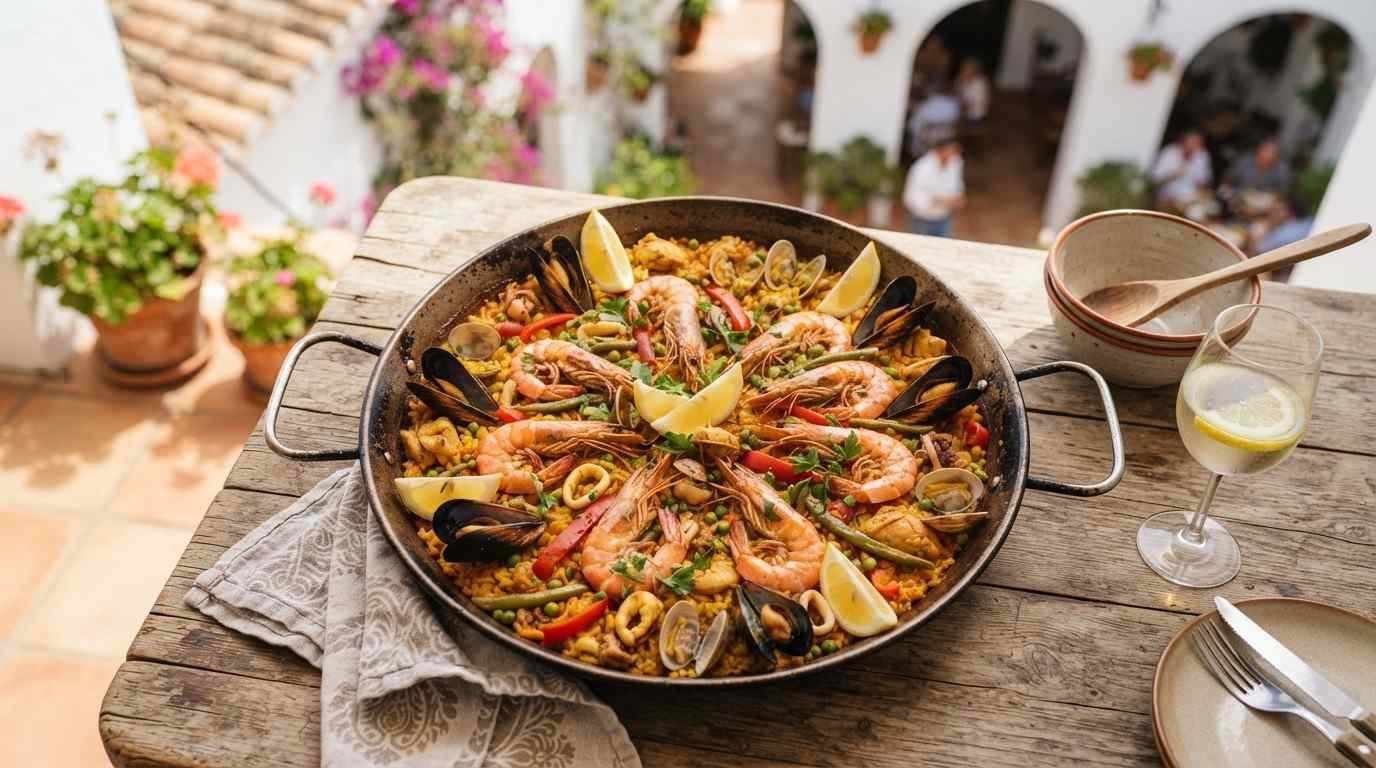
Quick answer: what is the most popular food in Spain?
The best-known foods in Spain are paella, tortilla española, jamón ibérico, gazpacho and patatas bravas. They are usually enjoyed as tapas or as part of a long, social meal rather than as a rushed plate.
Why Food in Spain Is So Special
Three things set Spanish eating apart: ingredients, rhythm and sharing.
- Ingredients first. Spain is the world’s largest olive oil producer, and its cured ham, seafood, peppers and saffron are protected by regional quality labels such as Denominación de Origen (DO).
- A different rhythm. Lunch is the main meal and dinner is late. Meals are meant to last.
- Sharing culture. Small plates placed in the middle of the table are the norm, which makes it easy to try many flavors in one sitting.
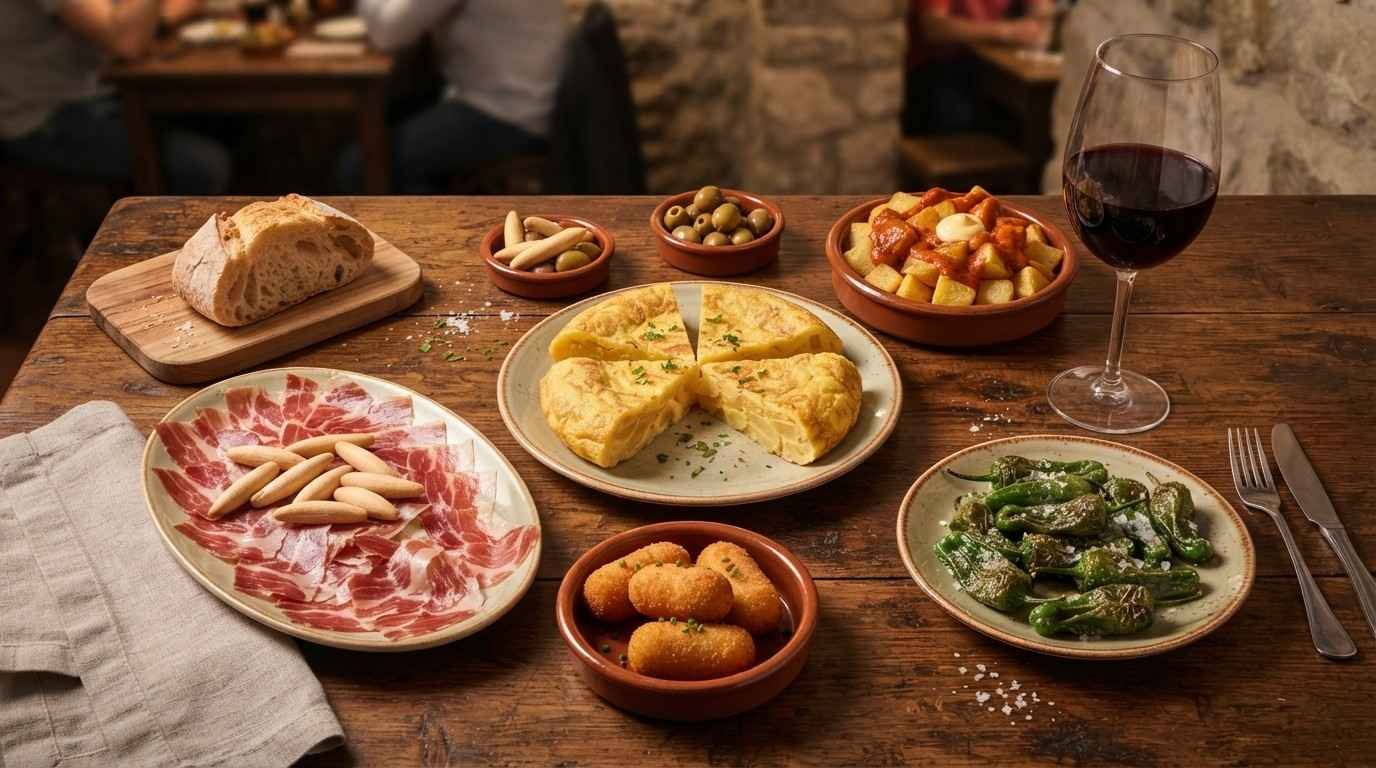
15 Traditional Foods in Spain You Should Try
These are the typical, famous and most popular Spanish foods that visitors search for most. Each one includes where it is strongest and a quick tip.
1. Paella
Rice cooked in a wide pan with saffron, olive oil and either rabbit and chicken (the original Valencian style) or seafood. The crispy bottom layer, called socarrat, is the prize.
Tip: Authentic paella is cooked to order and is traditionally a lunch dish. Be wary of places that display bright yellow paella all day.
2. Tortilla Española
A thick omelet of eggs, potatoes and sometimes onion. It is eaten hot or at room temperature, and Spaniards have lively debates about whether it should be juicy inside.
3. Jamón Ibérico
Dry-cured ham from Iberian pigs. The top grade, de bellota, comes from pigs fed on acorns and is sliced paper thin. Expect nutty, sweet and savory notes.
Tip: Order a ración to share instead of a sandwich if the goal is to taste the real thing.
4. Gazpacho and Salmorejo
Gazpacho is a chilled tomato, pepper, cucumber and garlic soup. Salmorejo, from Córdoba, is thicker and creamier, usually topped with ham and egg. Both are ideal in summer heat.
5. Patatas Bravas
Fried potato chunks with a spicy tomato sauce, often with garlicky aioli. Every bar has its own recipe, so comparing versions becomes a game.
6. Pulpo a la Gallega
Tender boiled octopus sliced over potatoes, then dressed with olive oil, sea salt and smoked paprika. Simple, and very hard to forget.
7. Croquetas
Creamy béchamel fritters, most often filled with jamón, chicken, cod or mushrooms. Crisp outside, molten inside, and a sign of a good home-style kitchen.
8. Pimientos de Padrón
Small green peppers fried in olive oil and sprinkled with salt. Most are mild, but a few are hot, which gives the saying “some are spicy, some are not.”
9. Fabada Asturiana
A rich white bean stew with chorizo, morcilla and pork. Hearty mountain comfort food that suits colder months.
10. Cocido Madrileño
A chickpea, vegetable and meat stew served in stages: first the broth, then the chickpeas and meats. Traditional in winter.
11. Gambas al Ajillo
Prawns sizzling in olive oil with garlic and chili. Bread for dipping is not optional.
12. Pisto
A slow-cooked vegetable stew of tomato, peppers and zucchini, often topped with a fried egg. A great vegetarian option.
13. Pan con Tomate
Toasted bread rubbed with ripe tomato, garlic and olive oil. Basic ingredients, big flavor, and the usual start to a Catalan meal.
14. Manchego Cheese
A firm sheep’s milk cheese, aged from a few weeks to over a year. Pair it with quince paste (membrillo) for a classic sweet and salty bite.
15. Bacalao al Pil Pil
Salt cod gently cooked in olive oil and garlic until the oil forms a silky emulsion. It shows how technique can turn few ingredients into something elegant.
Food in Spain by Region
Choosing what to eat is easier when travelers follow the region. Local specialties usually taste best where they were born.
| Region | Signature foods | Best for |
|---|---|---|
| Andalusia | Gazpacho, salmorejo, fried fish, jamón | Tapas hopping, summer dining |
| Catalonia | Pan con tomate, escalivada, crema catalana | Market food, Mediterranean seafood |
| Basque Country | Pintxos, bacalao, grilled steak, cider | Food lovers, fine dining |
| Valencia | Paella, arroz al horno, horchata | Rice dishes |
| Galicia | Pulpo, Padrón peppers, empanadas, Albariño wine | Seafood |
| Madrid and Castile | Cocido, roast lamb, bocadillo de calamares | Hearty traditional cooking |
Food in Spain: Barcelona
Barcelona blends Catalan classics with global creativity. Visitors should look for local markets, vermouth bars and small restaurants away from the main boulevards.
Food in Spain: Madrid
Madrid is the place for traditional taverns, bocadillos de calamares (fried squid sandwiches) and a full cocido on a winter afternoon.
Food in Spain: San Sebastián
Often called one of the great food cities of Europe, San Sebastián is known for pintxo bars and a very high number of Michelin-starred restaurants for its size.
Tapas, Pintxos and Street Food in Spain
What are tapas?
Tapas are small portions of food served with drinks. In some southern cities, such as Granada, a free tapa still arrives with each drink. In other places, plates are ordered and paid for individually.
Tapas, media ración and ración
- Tapa: a small bite, ideal for one person.
- Media ración: half portion, good for two.
- Ración: a full plate to share with the table.
Pintxos in the Basque Country
Pintxos are small snacks, often served on bread and held with a toothpick. Diners keep the picks, and the bartender counts them to calculate the bill.
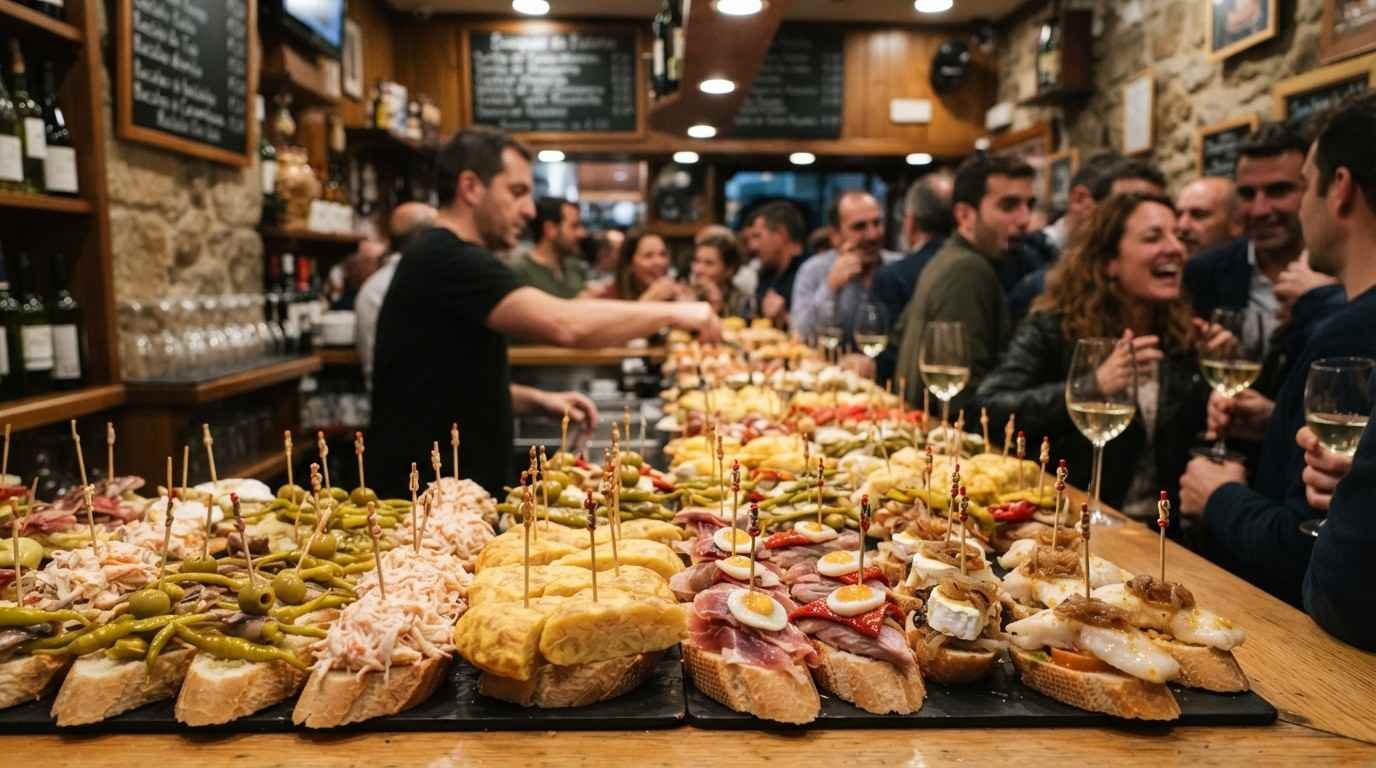
Street food in Spain
Spain is more of a bar and market culture than a street cart culture, but several snacks are easy to eat on the move:
- Bocadillo de calamares in Madrid.
- Churros dipped in thick hot chocolate.
- Empanadas in Galicia.
- Roasted chestnuts in cooler months.
- Fresh fruit and olives from local markets.
Spanish Desserts and Christmas Food in Spain
Classic desserts
- Crema catalana: custard with a burnt sugar crust.
- Flan: caramel custard found nearly everywhere.
- Tarta de Santiago: almond cake from Galicia.
- Churros con chocolate: a breakfast or late-night favorite.
Traditional Christmas food in Spain
Christmas menus change by region, but many tables include seafood starters, roast lamb or suckling pig, and a range of sweets.
- Turrón: nougat made with almonds and honey.
- Polvorones and mantecados: crumbly shortbread-style cookies.
- Roscón de Reyes: a ring-shaped cake eaten around January 6.
- Twelve grapes: eaten at midnight on New Year’s Eve, one for each chime.
What to Drink in Spain
- Wine: Rioja and Ribera del Duero for reds, Albariño and Verdejo for whites, and Cava for sparkling.
- Sherry: dry fino and manzanilla pair perfectly with ham and fried fish.
- Sangria and tinto de verano: refreshing summer drinks, popular but often made for tourists, so ask for the house version.
- Sidra: Asturian cider, traditionally poured from a height.
- Café con leche: the everyday coffee, usually with breakfast.
How to Order Food in Spain Like a Local
Meal times
| Meal | Typical time | What to expect |
|---|---|---|
| Desayuno (breakfast) | 7:30 – 10:00 | Coffee with toast, pastry or tortilla |
| Almuerzo (mid-morning) | 10:30 – 12:00 | A small sandwich or snack |
| Comida (lunch) | 14:00 – 16:00 | The main meal, often a menú del día |
| Merienda (snack) | 17:00 – 18:00 | Coffee, sweets, bocadillo |
| Cena (dinner) | 21:00 – 23:00 | Lighter, tapas or a shared meal |
Menú del día: the best-value meal
On weekdays, many restaurants offer a fixed lunch with a starter, main, dessert or coffee and a drink, usually at a much lower price than ordering à la carte. Prices vary by city, but a typical range is roughly €12 to €18.
Useful Spanish phrases
- “La cuenta, por favor”: the check, please. Spanish servers rarely bring it unasked.
- “Para compartir”: to share.
- “¿Qué me recomienda?”: what do you recommend?
- “Soy vegetariano/a”: I’m vegetarian.
- “Sin gluten”: gluten-free.
Tipping
Tipping is appreciated but not required. Leaving small change or rounding up is common, and a service charge is rarely added.
Practical Tips for Eating Well in Spain
Avoid these common mistakes
- Eating dinner at 6 pm and finding most kitchens closed or empty.
- Choosing restaurants with photo menus on busy tourist streets.
- Ordering paella for dinner at a random place.
- Expecting to split the bill item by item at a busy bar.
- Follow the locals. A full bar at 2:30 pm is a good sign.
- Eat standing at the bar. Prices can be lower than at tables, especially on terraces.
- Check regional menus. Order what the region is known for rather than a nationwide classic.
- Vegetarians: look for pisto, tortilla, grilled vegetables, salads and patatas bravas, and ask whether dishes use ham or stock, as “vegetarian” is not always understood strictly.
- Allergies: carry a translated allergy card, since nuts, shellfish and gluten are common.
Frequently Asked Questions About Food in Spain
What is the most popular food in Spain?
Paella, tortilla española and jamón ibérico are the most popular and recognizable foods. Tapas are the most popular way to enjoy them.
What is a typical Spanish meal?
A typical lunch has a starter, a main dish and dessert or coffee, often as a menú del día. Dinner is lighter and later, frequently made up of shared tapas.
Is food in Spain expensive?
It is generally good value, especially compared with many Western European countries. Lunch menus, bar counters and local markets keep costs down.
What time do people eat in Spain?
Lunch is usually between 2 and 4 pm and dinner between 9 and 11 pm. Some restaurants in tourist areas open earlier.
Is Spanish food spicy?
Not usually. Garlic, olive oil, paprika and saffron give strong flavors, but heat is mild apart from a few dishes like patatas bravas and gambas al ajillo.
Conclusion: Eat Your Way Through Spain
Food in Spain is about much more than a list of famous dishes. It is regional pride, seasonal ingredients and a shared table. Visitors who try paella in Valencia, pulpo in Galicia, pintxos in San Sebastián and cured ham in Andalusia will taste a different Spain at every stop.
The simplest approach is also the best one: eat on Spanish time, order what the region is known for, share plates and look for places filled with locals. Do that, and the food will become the most memorable part of the trip.