Food Safety Guide
How Many Inches Does Food Need to Be Stored Above the Ground?
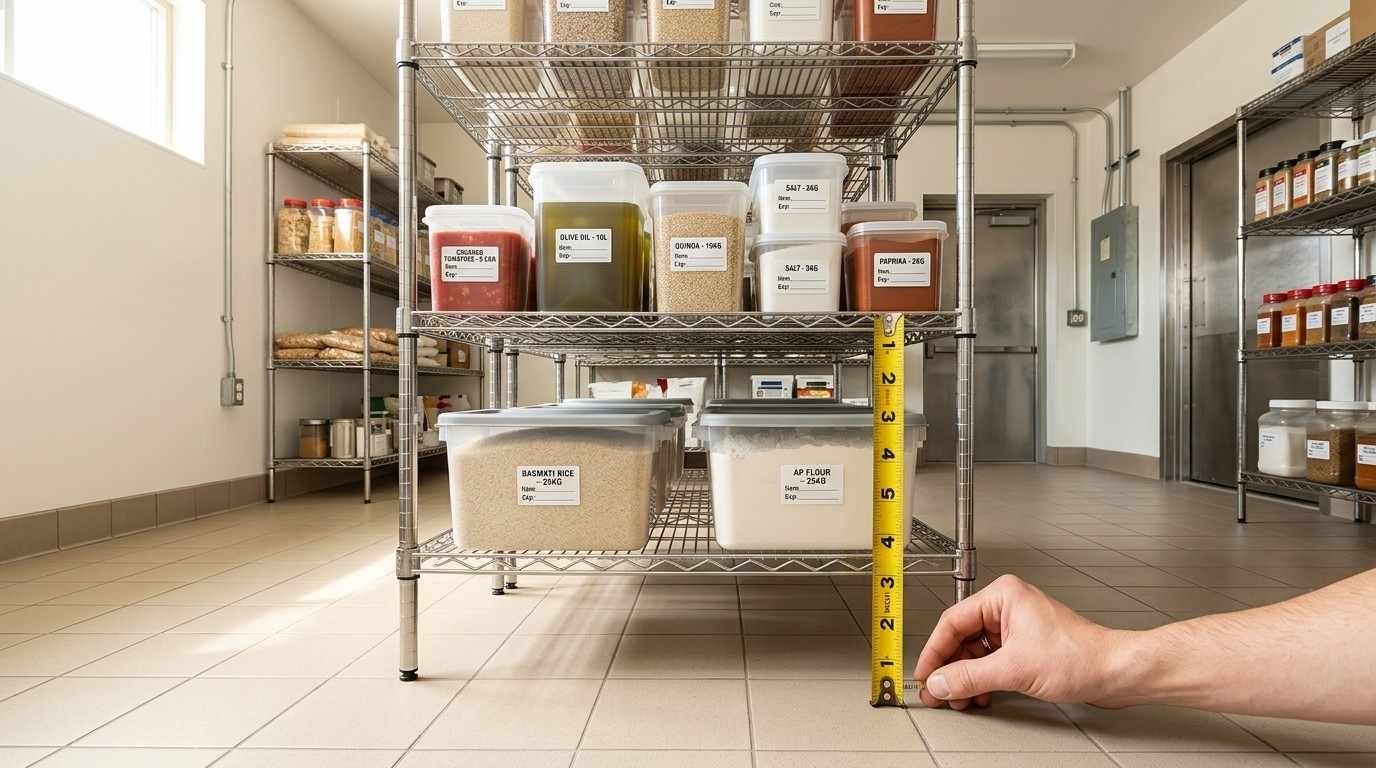
The FDA Food Code requires food to be stored a minimum of 6 inches above the floor. This applies to dry storage, walk-in coolers, freezers, and prep areas in restaurants, cafés, and takeout kitchens.
The 6-Inch Rule: What the Food Code Actually Says
Food storage rules can sound fussy until the reason behind them clicks. Still, the number itself is simple. The FDA Food Code, the model that most U.S. states and counties use as the basis for their own health regulations, says food must be stored in a clean, dry location and at least 6 inches (15 cm) above the floor.
Training providers such as ServSafe and StateFoodSafety teach the same standard, and it shows up in state rules, including Virginia’s food regulations. Food handlers also see it on nearly every certification exam.
| Measurement | Requirement |
|---|---|
| Inches | 6 minimum |
| Centimeters | 15 minimum |
| Applies to | Packaged food, loose food, ingredients, and single-use items |
| Measured from | The floor to the bottom of the lowest item (including its box) |
Why Food Must Be Kept Off the Floor
Floors are the dirtiest surface in any kitchen. Shoes, wheels, mop buckets, and spilled liquids all end up there, and so do pests. Raising food off the floor puts a physical gap between ingredients and everything that lands on it.
Source: CDC estimates of foodborne illness in the United States. Not every case traces back to floor storage, but contamination from surfaces and pests is a recognized risk factor.
1. Protection from splashes and mop water
Mopping sends dirty water in every direction. Boxes sitting on the floor soak it up like a sponge. Cardboard is especially absorbent, and anything inside can be affected.
2. Pest control
Rodents and cockroaches love dark, undisturbed corners. Items stacked on the floor give them shelter and a steady meal. Open space under shelving lets staff spot droppings and keeps hiding places to a minimum.
3. Easier cleaning
A clear 6-inch gap lets a mop or broom pass underneath. Dust, crumbs, and spills do not pile up where nobody looks.
4. Protection from dust, moisture, and condensation
Floors collect moisture, especially in walk-in coolers and basement storage. Raised storage keeps packaging dry and reduces mold risk.
Where the Rule Applies
Dry storage
Canned goods, flour, rice, spices, and sauces all belong on shelving. Bags of rice or flour left on the floor are among the most frequent findings in inspections.
Walk-in coolers and freezers
Cold storage follows the same rule. Even in a refrigerated space, a wet floor can contaminate boxes. Use sturdy racks designed for cold rooms.
Prep areas, back doors, and receiving
Deliveries often get dropped by the back door. That is fine for a few minutes during unloading. Left there, however, the items count as improperly stored. Move them promptly, and keep cold items out of the temperature danger zone of 41°F to 135°F (5°C to 57°C).
Food trucks, takeout kitchens, and ghost kitchens
Smaller spaces make compliance harder, but the rule does not shrink with the kitchen. Wall-mounted shelves and slim wire racks help. Restaurants known for busy delivery and takeout service, like many places listed in our delivery and takeout guide, depend on tidy back-of-house storage to keep orders safe at volume.
Exceptions and Local Variations
The 6-inch standard is the baseline, but local health departments adopt their own versions of the Food Code. A few points are worth knowing:
- Equipment on wheels: Many jurisdictions allow items on dollies, skids, or racks designed for bulk movement, as long as the items stay protected and the setup can be cleaned.
- Large beverage and gas containers: Pressurized kegs, bag-in-box syrup, and similar items are often treated differently.
- Sealed, cleanable floors: Some local codes allow slightly lower clearance in certain areas, but this varies.
- Temporary handling: Food being actively prepped, received, or moved is normally not considered “stored.”
The Right Shelf Order: Top to Bottom
Height off the floor is one rule. Where each food sits on the shelf is another. In refrigerators and walk-ins, store food by the minimum internal cooking temperature, with the lowest at the top. That way, raw juices never drip onto ready-to-eat food.
| Shelf position | Food | Min. cook temp |
|---|---|---|
| Top | Ready-to-eat food, cooked leftovers, produce | None needed |
| Second | Seafood | 145°F (63°C) |
| Third | Whole cuts of beef and pork | 145°F (63°C) |
| Fourth | Ground meat and ground fish | 155°F (68°C) |
| Bottom | Whole and ground poultry | 165°F (74°C) |
How to Set Up Compliant Food Storage
Choose the right shelving
- Use NSF-certified or commercial-grade shelving that is easy to clean.
- Pick wire or slatted shelves in cold rooms so air can circulate.
- Check weight ratings, since flour sacks and canned goods are heavy.
Leave room around the shelves
- Many kitchens leave about 2 inches from walls for airflow and cleaning. This is a common best practice, not a universal rule.
- Keep items clear of sprinkler heads. Fire codes commonly require about 18 inches of space below sprinklers, so check local requirements.
Label and rotate with FIFO
FIFO means first in, first out. Date each item, put new stock behind older stock, and use the oldest first. This cuts waste and keeps food fresh.
Keep food in covered, labeled containers
Transfer bulk items such as flour, sugar, and rice into food-grade containers with tight lids. Label them clearly to avoid allergen mix-ups.
Quick daily checklist
- ✅ Nothing is on the floor, including boxes during deliveries.
- ✅ Bottom shelf is at least 6 inches (15 cm) up.
- ✅ Raw items are below ready-to-eat items.
- ✅ Shelves, floors, and corners are clean and dry.
- ✅ Packages are intact, dated, and labeled.
Common Mistakes Inspectors Flag
- Delivery boxes left by the door. Put away cold items first, then dry goods.
- Buckets of ingredients on the floor. Oil, rice, and sauces in tubs still count.
- Measuring to the wrong point. Measure to the bottom of the lowest container.
- Overstuffed storage rooms. Clutter blocks cleaning and hides pests.
- Using the floor “just for now.” Temporary storage tends to become permanent.
- Dirty or damaged shelving. Rust and grime defeat the purpose.
Diners also pay attention. When searching for a trusted spot, whether comparing top-rated cheap eats or something more specific, many people check recent health inspection scores. Good storage habits show up in those scores.
Why this matters for dietary needs
Careful storage also helps prevent cross-contact, which matters for guests with allergies or special diets. Kitchens that serve halal Chinese dishes or vegan and gluten-free menus rely on separate, clearly labeled storage so ingredients stay uncontaminated.
What About Storing Food at Home?
Home kitchens are not inspected the same way, so the 6-inch rule is not legally required. It is still a smart habit, particularly for:
- Garages and basements, where flooding, damp, and rodents are more likely.
- Pantries with bulk purchases like rice and flour.
- Emergency supplies, which often sit untouched for months.
A simple wire shelf or sturdy plastic bin raises food off the floor and costs very little. Keep pet food and cleaning supplies stored separately.
Frequently Asked Questions
How far off the floor should food be stored?
At least 6 inches (15 cm) above the floor under the FDA Food Code. Check whether local rules are stricter.
Why must food be stored 6 inches off the floor?
The gap protects against splashes, pests, dust, and mop water, and it lets staff clean underneath shelving.
Can food be stored on the floor in a walk-in cooler?
No. Walk-in coolers and freezers follow the same rule. Use racks or shelving instead.
Does the 6-inch rule apply at home?
It is not a legal requirement at home, but it is a very good habit for pantries, garages, and basements.
What happens if a restaurant stores food on the floor?
Inspectors can cite it as a violation. Depending on the area, that may mean lost points, a re-inspection, or fines.
Conclusion
The answer is clear: food should be stored at least 6 inches (15 cm) above the ground. The rule protects food from dirty water, pests, and dust, and it makes cleaning far easier. Pair it with the correct shelf order, FIFO rotation, and labeled containers to build a storage system that passes inspections and keeps customers safe.
Whether running a restaurant or tidying a home pantry, the habit is the same: get it off the floor. For more dining and food guides, visit the Chinese Food Near Me blog or head to the homepage.