Chinese Food: A Complete Guide to Regional Cuisines, Classic Dishes & Smart Ordering
From fiery Sichuan hot pot to delicate Cantonese dim sum, here is everything worth knowing before the next takeout order.
Chinese food is one of the most loved and most misunderstood cuisines on earth. In the United States alone, an estimated 40,000-plus Chinese restaurants operate, more than the biggest fast-food chains combined, according to figures long cited by Chinese restaurant associations. Yet the plate of sweet orange chicken at the neighborhood takeout counter is only one tiny slice of a culinary tradition that spans thousands of years and dozens of regions.
This guide explains how Chinese cuisine is organized, which dishes define each region, how American Chinese food differs from authentic cooking, and how to find genuinely good Chinese food near you.
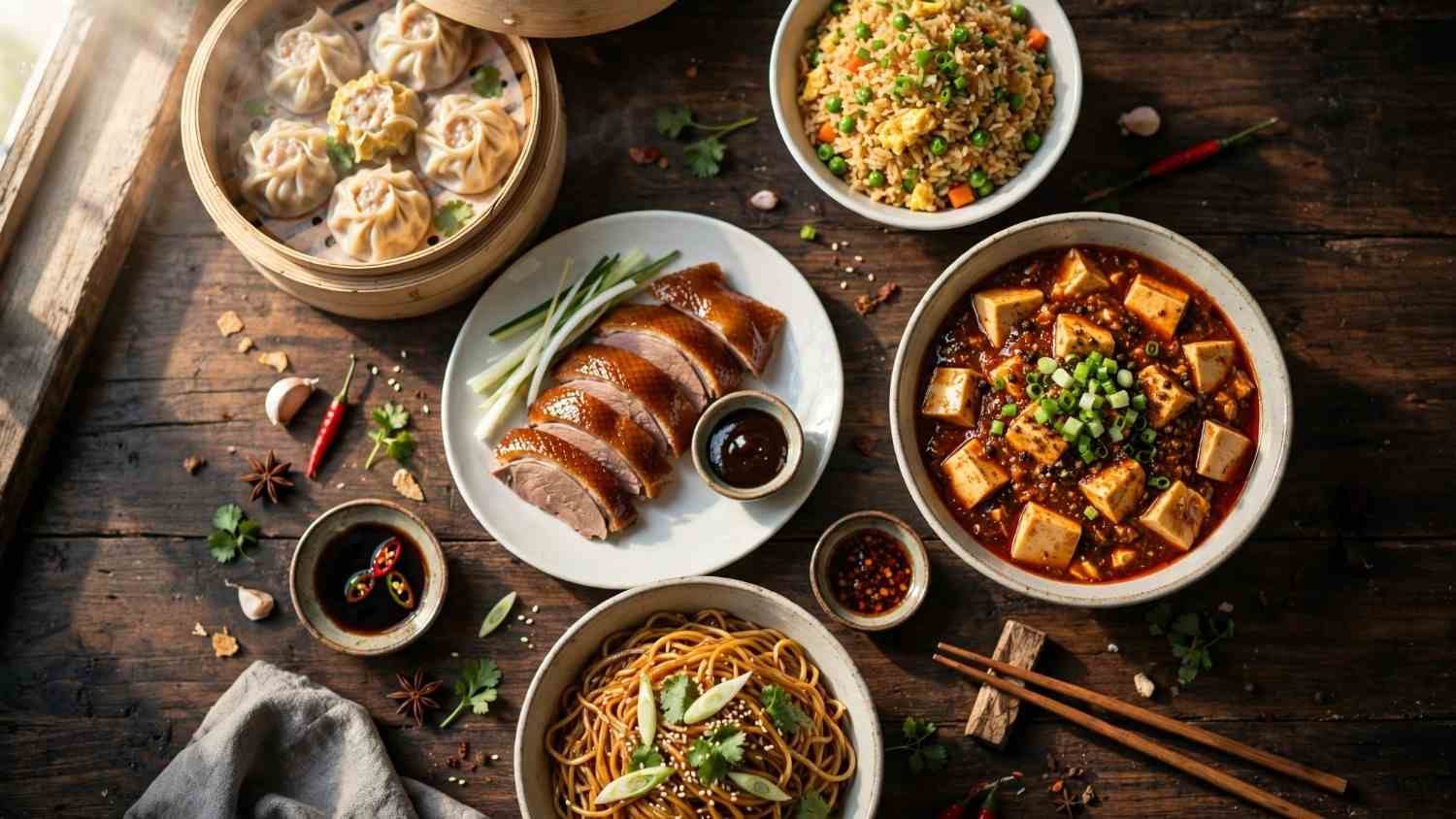
What Counts as Chinese Food?
There is no single “Chinese food.” China is roughly the size of the United States, with mountains, coastlines, deserts and subtropical farmland. Each environment shaped what people grow, preserve and cook.
The Core Pillars of Chinese Cooking
- Balance: Meals pair rice, noodles or buns with vegetables, protein and soup, aiming for contrast in texture and taste.
- Technique: Stir-frying (chao), steaming, braising, roasting and deep-frying each produce different results.
- Flavor layering: Ginger, garlic, scallion, soy sauce, rice wine, vinegar, star anise and chili form the backbone.
- Wok hei: The smoky “breath of the wok” from a very hot pan, prized in Cantonese stir-fries.
The Four Tastes of a Meal
Traditional menus aim to balance sweet, sour, salty and bitter, with Sichuan cooking adding ma la, the tingling-numbing-spicy sensation created by Sichuan peppercorns and dried chilies.
The Eight Regional Cuisines of China
Chinese culinary scholars traditionally recognize eight major cuisines. Knowing them turns a long menu into a map.
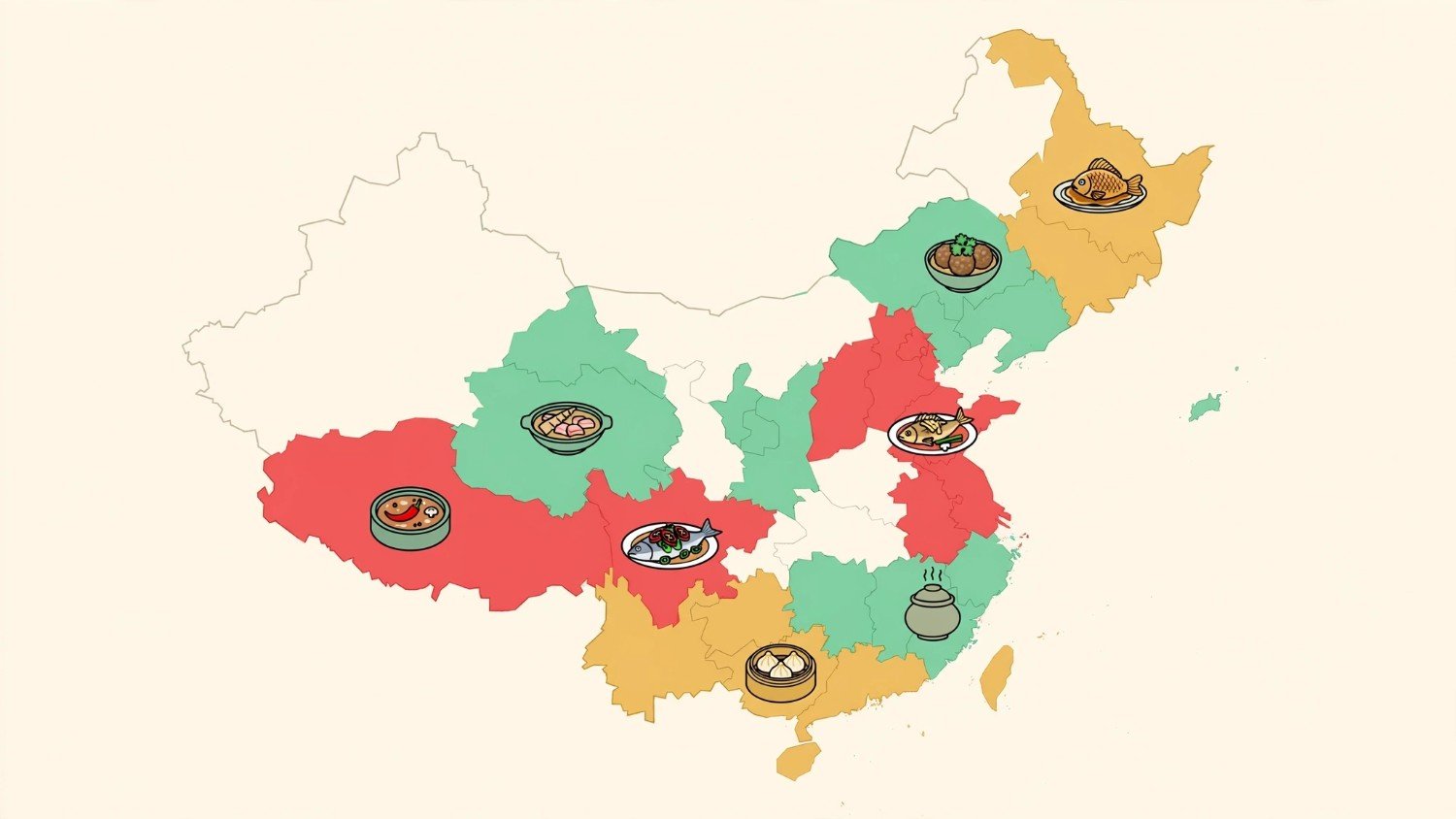
| Cuisine | Flavor profile | Signature dishes |
|---|---|---|
| Sichuan (Chuan) | Bold, spicy, numbing | Mapo tofu, kung pao chicken, hot pot |
| Cantonese (Yue) | Fresh, light, natural | Dim sum, char siu, steamed fish |
| Shandong (Lu) | Salty, savory, seafood-rich | Braised sea cucumber, sweet and sour carp |
| Jiangsu (Su) | Delicate, slightly sweet | Lion’s head meatballs, salted duck |
| Zhejiang (Zhe) | Fresh, mellow, fragrant | West Lake fish, Dongpo pork |
| Fujian (Min) | Light, umami, soup-focused | Buddha jumps over the wall, fish balls |
| Hunan (Xiang) | Hot, sour, smoky | Chairman Mao’s red-braised pork, steamed fish head with chilies |
| Anhui (Hui) | Earthy, wild herbs, braised | Stinky mandarin fish, bamboo shoot dishes |
Beyond the Big Eight
Northern China is known for wheat: hand-pulled noodles, dumplings (jiaozi), steamed buns and Peking duck from Beijing. Hong Kong blends Cantonese cooking with British influence, producing milk tea, egg tarts and “cha chaan teng” comfort food. Xinjiang and Hui Muslim cooking add lamb, cumin and flatbreads, which matters for anyone searching for halal Chinese food.
Most Popular Chinese Dishes to Try
Classic Dishes Loved Worldwide
- Dumplings: Boiled, steamed or pan-fried parcels of pork, shrimp or vegetables.
- Fried rice: Day-old rice stir-fried with egg, scallion and protein.
- Peking duck: Crisp-skinned roast duck served with thin pancakes and hoisin.
- Mapo tofu: Silken tofu in a spicy, numbing chili-bean sauce.
- Congee: Slow-cooked rice porridge, a breakfast and comfort staple.
- Hot pot: A simmering broth at the table for cooking meats, vegetables and noodles.
Dim Sum Favorites
Dim sum is a Cantonese tea-house tradition of small shared plates. First-timers usually start with har gow (shrimp dumplings), siu mai (pork and shrimp), char siu bao (barbecue pork buns) and rice noodle rolls.
Noodles: Pick Your Style
Lo mein uses soft tossed noodles, chow mein uses crisped or fried noodles, and chow fun uses wide rice noodles. In Lanzhou, hand-pulled beef noodle soup is a regional icon.
American Chinese Food vs. Authentic Chinese Food
Chinese immigrants, many from Guangdong, opened restaurants across America from the 1800s onward. To suit local ingredients and tastes, cooks created new dishes that now form a cuisine of their own.
| Feature | American Chinese | Regional / authentic |
|---|---|---|
| Sauces | Thick, sweet, glossy | Thinner, savory, vinegary or numbing |
| Proteins | Battered, deep-fried chicken, beef | Whole fish, offal, pork belly, tofu, steamed or braised |
| Vegetables | Broccoli, carrots, onions | Bok choy, gai lan, pea shoots, lotus root |
| Famous dishes | General Tso’s, crab rangoon, chop suey | Xiaolongbao, mapo tofu, Hainan chicken |
The Story Behind General Tso’s Chicken
The dish is widely credited to Taiwanese chef Peng Chang-kuei, who created it in the 1950s. It was later sweetened and crisped in New York restaurants in the 1970s. Orange chicken has a more recent origin, popularized by the Panda Express chain in the late 1980s.
Neither style is “wrong.” American Chinese food is a legitimate comfort cuisine with its own history. The best approach is to enjoy both and know which one is on the plate.
Is Chinese Food Healthy?
It depends on what is ordered. Traditional home cooking is vegetable-heavy and relies on steaming and quick stir-frying. Restaurant takeout, however, often leans on oil, sugar and sodium.
- Steamed fish or chicken with ginger and scallion
- Buddha’s delight or stir-fried greens with garlic
- Egg drop, hot and sour or wonton soup
- Steamed dumplings instead of fried
- Brown rice and sauce on the side
What to Limit
- Deep-fried, battered dishes with sweet sauces
- Large portions of fried rice or lo mein
- Heavily salted sauces, since soy sauce, oyster sauce and hoisin are high in sodium
Dietitians generally suggest filling half the plate with vegetables, sharing dishes family-style and asking for less oil. Anyone managing a medical condition should check with a doctor or registered dietitian.
How to Find the Best Chinese Food Near You
“Chinese food near me” is one of the most searched food queries online, with more than a million searches per month in the US according to Ahrefs keyword data. Results range from outstanding to forgettable, so a few habits help.
A Six-Point Checklist
- Read dish-specific reviews. “The soup dumplings were juicy” beats “great food.”
- Prefer a focused menu. Restaurants specializing in one region often cook it better than 200-item menus.
- Look for a second menu. Many restaurants keep a separate Chinese-language or specials list. Ask politely.
- Check who is eating there. A full dining room of Chinese families is a strong signal.
- Judge the basics. Fried rice with real wok flavor and crisp vegetables reveals kitchen skill.
- Order a mix. One familiar dish plus one new regional dish is the easiest way to explore.
Dine-In, Takeout or Delivery?
Dumplings, noodle soups and anything crispy are best eaten fresh. Braised dishes, fried rice and chow mein travel well. For delivery, order sauces on the side to keep fried items crunchy.
Gluten-Free, Halal & Vegetarian Chinese Food
Searches for gluten-free and halal Chinese options keep growing, and good choices exist with some planning.
- Gluten-free: Regular soy sauce contains wheat. Ask for tamari or steamed dishes with sauce on the side, and choose rice noodles over wheat noodles.
- Halal: Look for Lanzhou noodle shops and Xinjiang-style restaurants, which often serve halal lamb and beef. Confirm certification directly.
- Vegetarian: Dishes such as dry-fried green beans, tomato and egg, and mapo tofu (ask for no pork) are naturally plant-forward. Verify broths and sauces.
- Allergies: Peanut, shellfish and sesame are common. Always tell the restaurant about allergies before ordering.
Frequently Asked Questions About Chinese Food
What is the most popular Chinese food?
In the US, fried rice, lo mein, dumplings, sweet and sour dishes and General Tso’s chicken top many order lists. In China, dumplings, noodles, hot pot, mapo tofu and Peking duck are among the best-known favorites.
Is Chinese food healthy?
It can be. Steamed fish, vegetable stir-fries, tofu and broth soups are nutritious. Deep-fried dishes with sugary sauces are higher in calories, sodium and sugar, so portion and preparation matter.
What is the difference between American Chinese and authentic Chinese food?
American Chinese food adapted regional recipes to local ingredients and tastes, creating sweeter sauces and more fried proteins. Authentic regional cooking varies widely and uses more steaming, braising, pickling and spice.
How do I find good Chinese food near me?
Search “Chinese food near me,” then filter by recent, dish-specific reviews. Favor focused menus, ask about regional specialties and watch for restaurants popular with Chinese diners.
What are the main types of Chinese cuisine?
The eight traditional cuisines are Shandong, Sichuan, Cantonese, Jiangsu, Zhejiang, Fujian, Hunan and Anhui.