Food Names: A Complete List by Type, Cuisine and Letter
A clear, friendly guide to the names of foods in English, with examples, pronunciation-friendly groupings, and practical tips for remembering them.
Why food names matter
Knowing food names helps with more than vocabulary. It makes grocery shopping easier, menus less intimidating, and recipes much simpler to follow. For English learners, food is one of the first practical topics, because it comes up at every meal.
Interest is real and steady. Keyword data from Ahrefs shows that “food names” alone draws over 1,000 searches per month, and its keyword tool lists more than 3,600 related ideas. People look for dog and cat food names, cuisine lists, and even funny or cute names.
Food names by food group
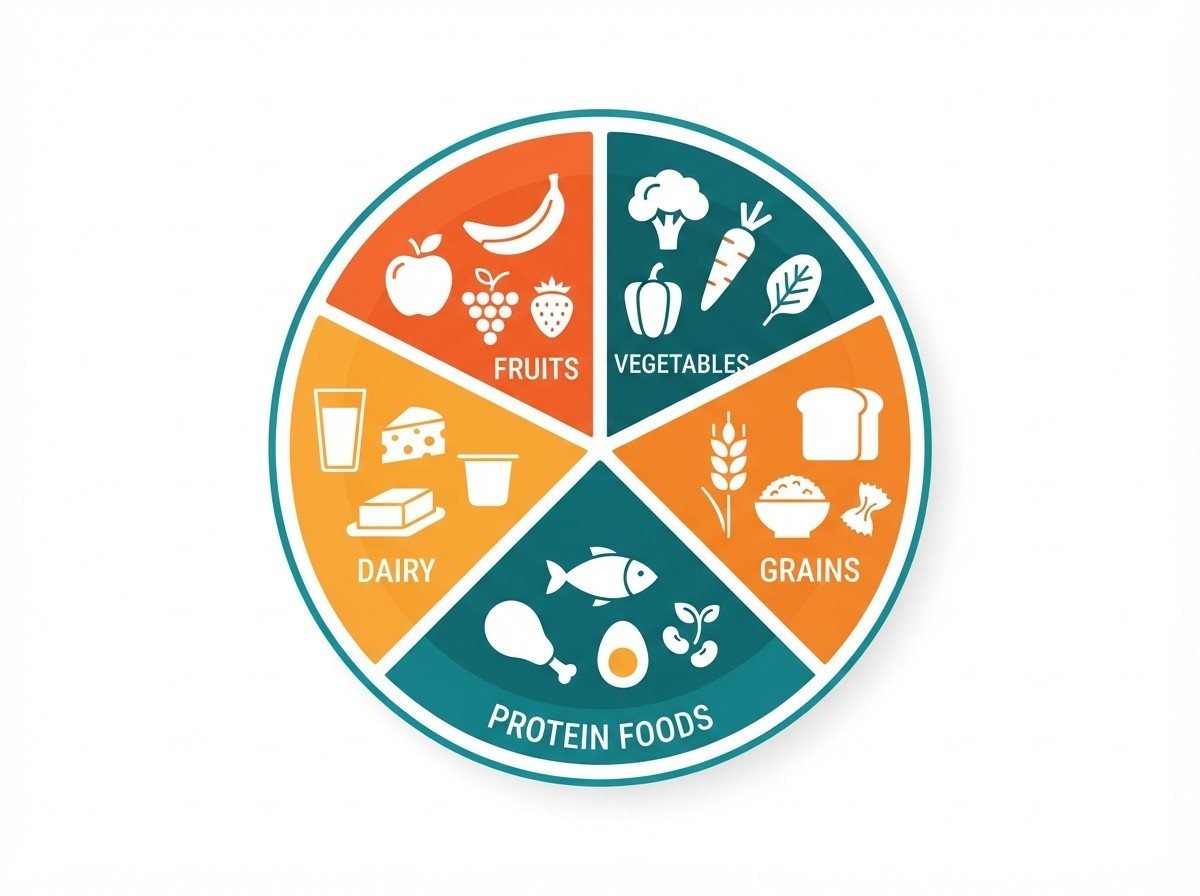
The simplest way to organize food names is by group. The USDA’s MyPlate guidance sorts foods into five groups: fruits, vegetables, grains, protein foods, and dairy. The lists below follow that model and add snacks and drinks.
Fruit names
- Apple
- Banana
- Orange
- Grape
- Strawberry
- Blueberry
- Mango
- Pineapple
- Watermelon
- Peach
- Pear
- Cherry
- Kiwi
- Lemon
- Papaya
- Pomegranate
Fruit vocabulary tip
Many fruit names are used as colors too, such as orange, lemon, and peach. That overlap makes them easy to remember.
Vegetable names
- Carrot
- Broccoli
- Spinach
- Potato
- Tomato
- Onion
- Garlic
- Cucumber
- Lettuce
- Cauliflower
- Bell pepper
- Zucchini
- Eggplant
- Corn
- Peas
- Mushroom
Botanically, tomatoes and cucumbers are fruits. In the kitchen, though, both are treated as vegetables, and menus follow that habit.
Grains, bread, and starches
- Rice
- Wheat
- Oats
- Bread
- Pasta
- Noodles
- Tortilla
- Quinoa
- Barley
- Cereal
- Bagel
- Couscous
Protein food names
- Chicken
- Beef
- Pork
- Lamb
- Turkey
- Salmon
- Shrimp
- Tuna
- Eggs
- Tofu
- Lentils
- Chickpeas
- Black beans
- Almonds
- Peanuts
Dairy and dairy alternatives
- Milk
- Cheese
- Yogurt
- Butter
- Cream
- Ice cream
- Soy milk
- Oat milk
- Almond milk
Snacks, sweets, and drinks
| Type | Common names |
|---|---|
| Snacks | Popcorn, chips, crackers, pretzels, granola bar |
| Sweets | Cake, cookie, brownie, chocolate, donut |
| Hot drinks | Coffee, tea, hot chocolate |
| Cold drinks | Water, juice, lemonade, smoothie, soda |
Meals of the day
Three meal names come up constantly: breakfast, lunch, and dinner. A light bite between meals is called a snack. Some regions say supper for the evening meal.
Food names by cuisine
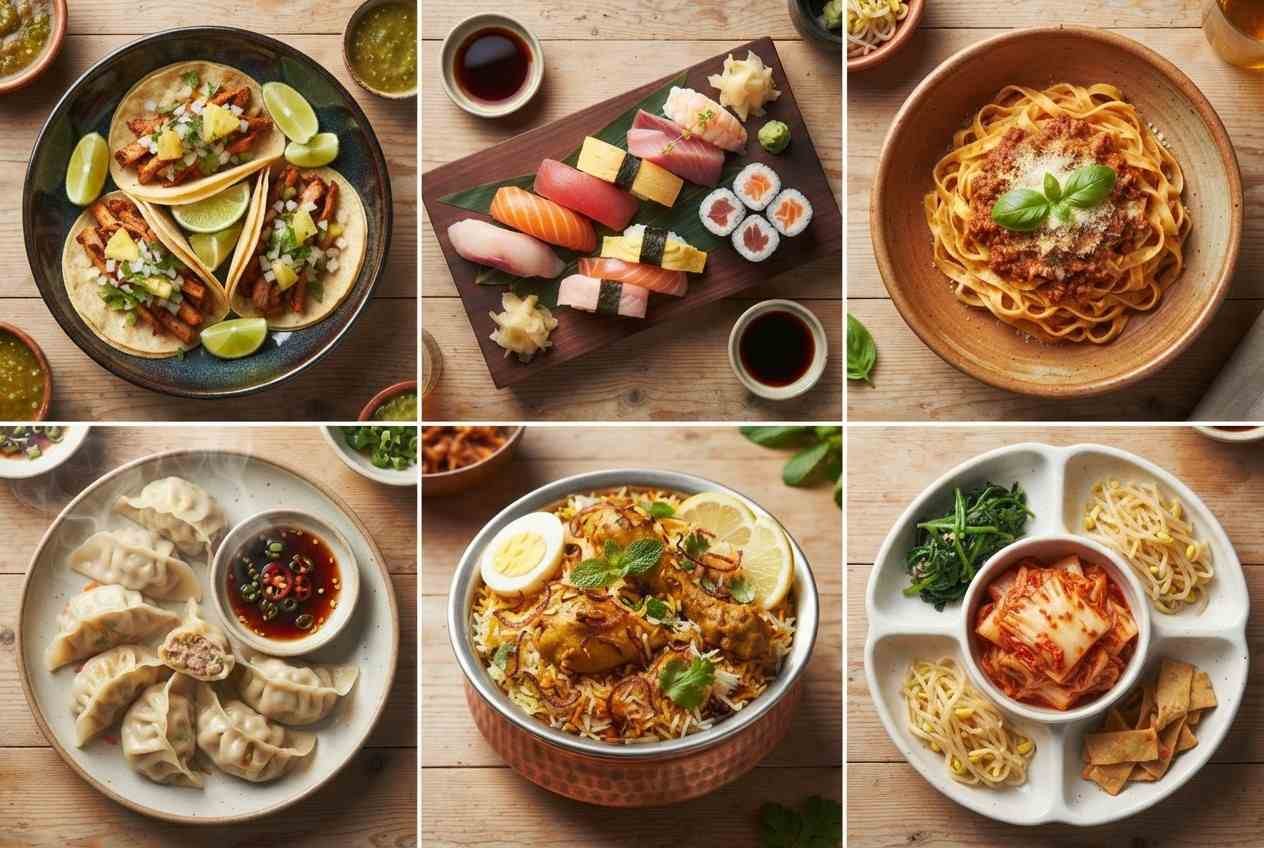
Dish names often keep their original language, which is why they can feel unfamiliar. Here are well-known examples, with a plain description of each.
| Cuisine | Dish names | What to expect |
|---|---|---|
| Mexican | Tacos, enchiladas, tamales, guacamole, quesadilla | Corn or flour tortillas, beans, chili, fresh salsa |
| Italian | Lasagna, risotto, bruschetta, gnocchi, tiramisu | Pasta, tomato, olive oil, cheese |
| Japanese | Sushi, ramen, tempura, miso soup, onigiri | Rice, fish, broth, seaweed |
| Korean | Kimchi, bibimbap, bulgogi, tteokbokki | Fermented vegetables, rice, grilled meat |
| Indian | Biryani, samosa, naan, dal, paneer tikka | Layered spices, lentils, flatbreads |
| Spanish | Paella, tortilla española, gazpacho, churros | Saffron rice, eggs, cold soup |
| Filipino | Adobo, sinigang, lumpia, pancit | Savory-sour stews, noodles, fried rolls |
Chinese food names
Chinese cuisine is a family of regional styles, so names vary widely. Common ones include dumplings, chow mein, fried rice, kung pao chicken, mapo tofu, hot and sour soup, and Peking duck. Many appear on takeout menus in slightly adapted forms.
Ordering locally? A few focused guides can help you find what suits your needs:
- Chinese food near me for a general starting point
- Halal Chinese options
- Vegan and gluten-free dishes
- Delivery and takeout choices
- Top-rated cheap eats
More background reading lives on the blog.
Food names A to Z
Alphabet lists are popular for classroom games, word puzzles, and vocabulary drills. One reliable example for each letter:
| Letters | Foods |
|---|---|
| A–E | Apple, Banana, Carrot, Donut, Egg |
| F–J | Fig, Grape, Honey, Ice cream, Jam |
| K–O | Kiwi, Lemon, Mango, Noodles, Orange |
| P–T | Pizza, Quinoa, Rice, Strawberry, Tomato |
| U–Z | Udon, Vanilla, Watermelon, Xigua (watermelon in Chinese), Yogurt, Zucchini |
The letters X and Q are the hardest. For X, teachers often use xigua or xylitol. For Q, quinoa, quiche, and quesadilla all work.
Special kinds of food names
Food names for pets
Pet owners often borrow food words for cute names. Popular picks include Mochi, Biscuit, Peanut, Waffles, Pickles, Nacho, Cookie, and Olive. Short names with a clear vowel sound are easier for dogs and cats to recognize.
Funny and weird food names
Some real foods have playful names, such as spotted dick (a British pudding), toad in the hole, and bubble and squeak. These are great conversation starters, and they show how history and humor shape food language.
Fast food and restaurant names
Menus also use brand-style item names like combo, value meal, and wrap. These are marketing terms rather than food types, so check ingredients when diet matters.
Names that cross languages
English borrows heavily. Ketchup has roots in Southeast Asia, yogurt comes from Turkish, and pasta is Italian. Spotting borrowed words is a fun route into vocabulary.
How to learn food names
- Group by theme. Learn ten fruits, then ten vegetables. Small sets stick better than long lists.
- Use real labels. Read packaging at home or in the store.
- Pair words with images. Picture flashcards speed up recall.
- Cook from a recipe. Naming each ingredient as it is used builds lasting memory.
- Practice ordering. Read menus aloud, then try a short role-play.
- Review weekly. Spaced repetition beats cramming.
Common mistakes to avoid
- Mixing singular and plural: one carrot, two carrots. Some foods, like rice and milk, are uncountable.
- Confusing similar words, such as pepper (spice) and bell pepper (vegetable).
- Assuming dish names mean the same everywhere. “Biscuit” differs between the US and UK.
Frequently asked questions
What are some common food names?
Common ones include apple, bread, rice, chicken, milk, cheese, pasta, eggs, potato, and tomato. They appear in nearly every kitchen and menu.
What are the main food groups?
MyPlate lists five: fruits, vegetables, grains, protein foods, and dairy. Many guides also add oils, sweets, and drinks.
How do I name a food I do not recognize?
Check the ingredient list, search the dish name with a photo, or ask the cook. A translation app that reads menu text can also help.
What are good food names for pets?
Mochi, Biscuit, Peanut, Waffles, Nacho, and Olive are popular. Pick something short and easy to say.
Is there a food for every letter of the alphabet?
Yes. X and Q are the trickiest, but xigua, quinoa, and quiche cover them.
Conclusion
Food names fall into clear groups: fruits, vegetables, grains, proteins, dairy, snacks, and drinks. Cuisine names add flavor, and alphabet lists make practice playful. Learn them in small themed sets, connect them to real meals, and review often.
Want to put your new vocabulary to use? Browse the blog or start with Chinese food near me.