Food Handler Certification: Rules, Cost & How to Get It
Everything a new cook, server, barista or kitchen helper needs to know about earning a food handler card, in plain English and in about two hours.
Starting a job in a restaurant, café, food truck or school kitchen? Sooner or later, someone will ask, “Do you have your food handler card?” In many states, the answer needs to be yes within the first few weeks on the job.
This guide explains what a food handler is, who needs certification, what it costs, and how to get a valid card online without wasting money on the wrong course.
What Is a Food Handler?
The term covers far more than chefs. Line cooks, dishwashers, bussers, baristas, deli staff, bartenders who cut garnishes, caterers and school cafeteria workers all qualify.

Who Needs a Food Handler Card?
Rules vary by state, county and sometimes city. In general, certification applies to employees who work with food, drinks, ice, utensils or equipment in:
- Restaurants, fast-food outlets and cafés
- Food trucks, pop-ups and catering companies
- Grocery delis, bakeries and butcher counters
- Hotels, hospitals, schools and senior living kitchens
- Bars and breweries that prepare food or garnishes
Food Handler Card vs. Certificate vs. License vs. Manager Certification
Search results mix these terms together, which confuses people. Here is how they usually differ:
| Term | What it usually means | Who needs it |
|---|---|---|
| Food handler card / permit | Proof of basic safety training; often issued by the training provider or county | General food employees |
| Food handler certificate | The printable completion document; frequently the same as the card | General food employees |
| Food handler license | Informal name for the card in some regions; not a business license | General food employees |
| Food protection manager certification | Advanced, proctored exam (e.g., ServSafe Manager) | Person in charge, managers |
State-by-State Food Handler Requirements
Requirements change, so always confirm with your local health department. These examples show how much rules differ:
| State | Training required? | Deadline after hire | Card valid |
|---|---|---|---|
| California | Yes, statewide | 30 days | 3 years |
| Texas | Yes, statewide | 60 days | 2 years |
| Illinois | Yes, statewide | 30 days | 3 years |
| Florida | Yes, for many establishments (state-regulated) | 60 days | 3 years |
| Washington | Yes (Food Worker Card) | 14 days | 2 years |
| New York City | Food Protection Certificate required for supervisors; handler training varies | Varies | Varies |
How to Get a Food Handler Card in 5 Steps
- Check your local rules. Search your state or county health department site for “food handler training.” Note any approved-provider list.
- Pick an accredited course. Look for ANSI National Accreditation Board (ANAB) approval, or a provider your health department names. ServSafe, StateFoodSafety, eFoodHandlers, 360training (Learn2Serve) and Always Food Safe are widely used.
- Complete the training. Most courses run 1–2 hours, are self-paced and work on a phone.
- Pass the assessment. The final quiz usually has 40 or fewer questions with a passing score near 70–75%, and free retakes are common.
- Download and share your card. Print two copies, give one to your employer and keep a digital copy on your phone.
Online vs. In-Person Training
- Online: cheaper, flexible, instant certificate. Best for most workers.
- In-person: useful for hands-on learners or when a county requires it.
How Much Does a Food Handler Card Cost?
Most accredited online courses cost about $7 to $15. Some counties charge an extra registration fee, and a few employers reimburse the cost. Be cautious of sites charging far more, or promising a card with no training, since these are often not accepted.
How Long Is It Valid?
Typically two to three years. Set a calendar reminder two months before expiry so you never work with a lapsed card.
What You Will Learn in a Food Handler Course
1. Foodborne Illness and Pathogens
Courses cover common culprits such as Salmonella, E. coli, Listeria and norovirus, plus how they spread.
2. Personal Hygiene
Handwashing
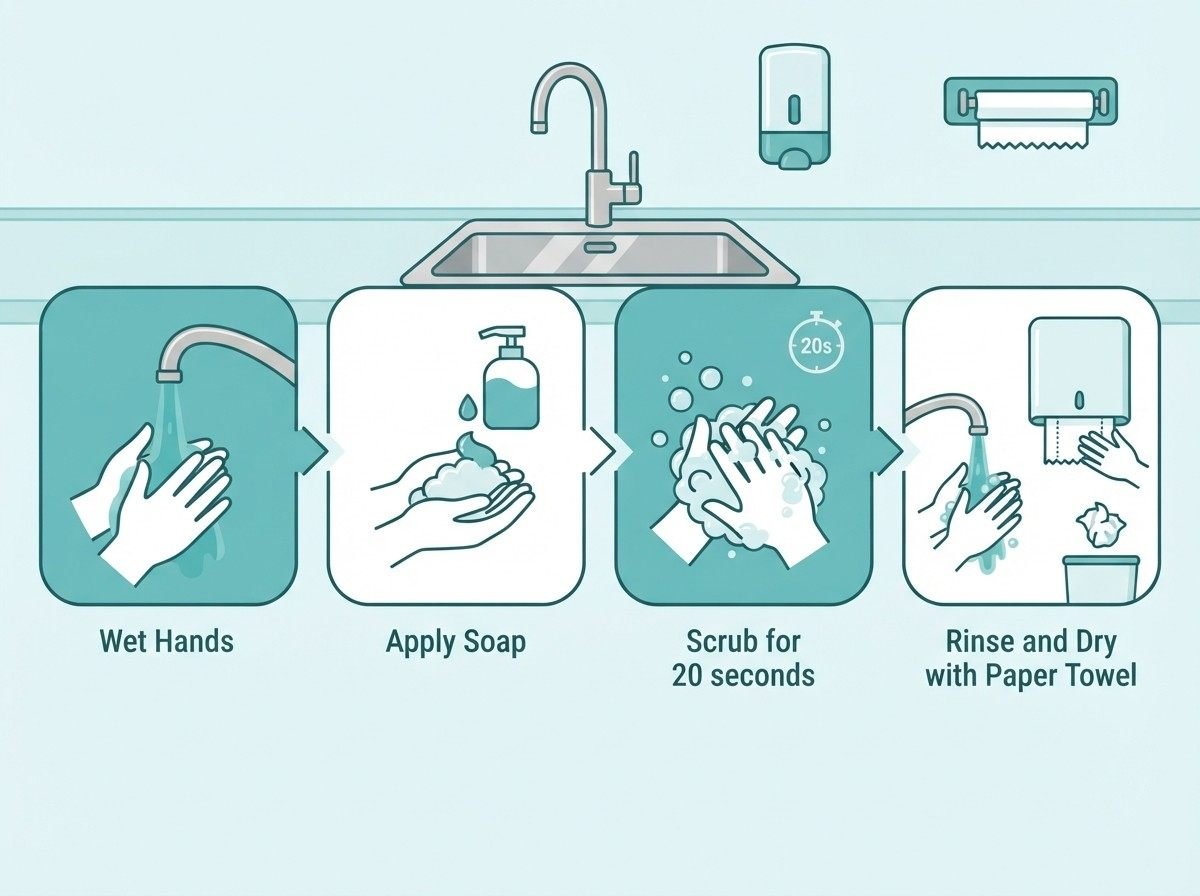
Wash for at least 20 seconds with soap and warm water, then dry with a single-use towel. Wash after restrooms, handling raw meat, touching your face, taking out trash and before putting on gloves.
Illness policy
Workers with vomiting, diarrhea, jaundice or a sore throat with fever should report it and stay off food duty.
3. Time and Temperature Control
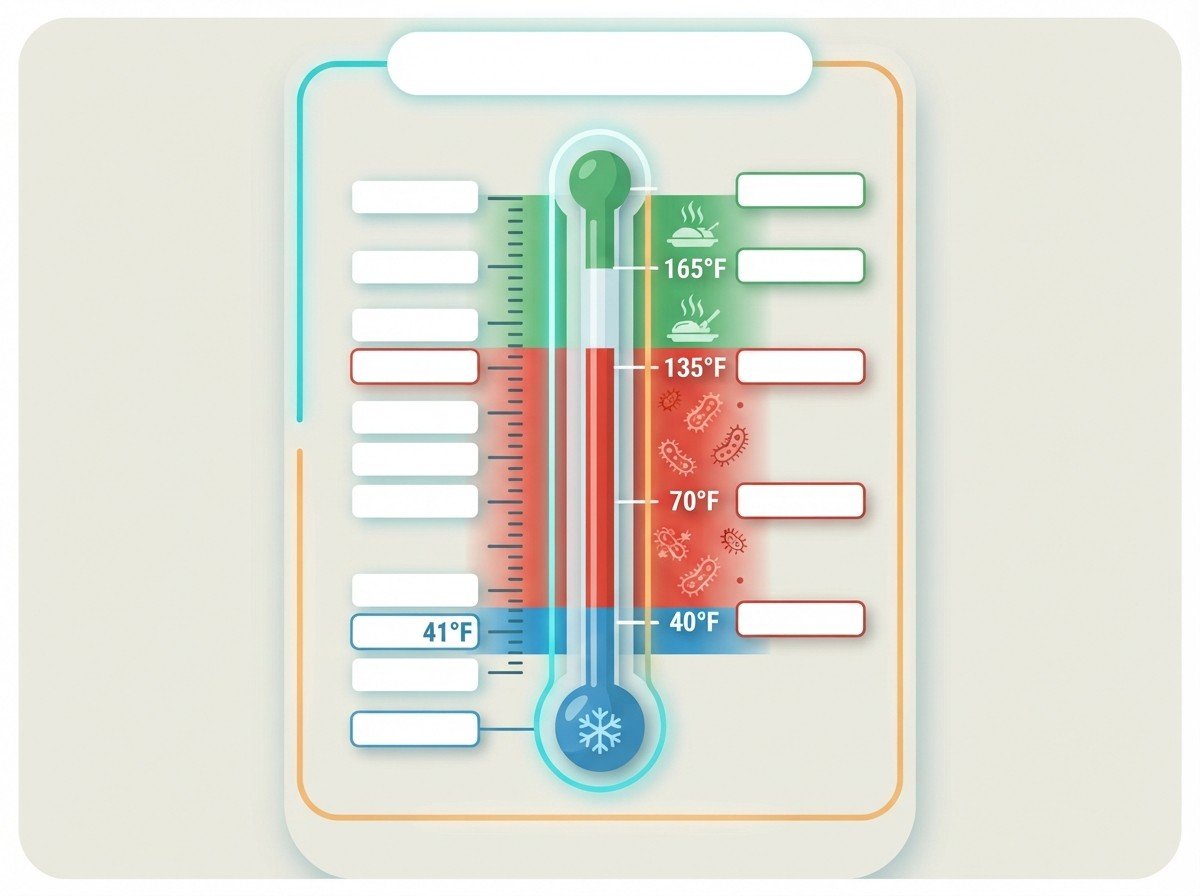
Bacteria multiply fastest in the temperature danger zone: 41°F to 135°F (5°C to 57°C).
| Food | Safe internal cooking temperature |
|---|---|
| Poultry, stuffed foods, leftovers | 165°F (74°C) |
| Ground meat | 155°F (68°C) |
| Eggs, pork, beef steaks, fish | 145°F (63°C) |
| Hot holding | 135°F (57°C) or above |
| Cold holding | 41°F (5°C) or below |
Federal Food Code values can differ slightly by jurisdiction, so follow your local code if it is stricter.
4. Cross-Contamination and Allergens
- Store raw meat below ready-to-eat food.
- Use separate, color-coded cutting boards.
- Clean and sanitize surfaces between tasks.
- Know the major allergens: milk, eggs, fish, shellfish, tree nuts, peanuts, wheat, soy and sesame.
5. Cleaning and Sanitizing
Cleaning removes dirt; sanitizing reduces germs to safe levels. Always do both, in that order, and test sanitizer concentration with strips.
Practical Tips to Pass on Your First Try
- Memorize the numbers: 41°F, 135°F, 165°F and 20 seconds appear again and again.
- Take notes on a phone or notepad and review them before the quiz.
- Try a practice test if your provider offers one.
- Think like an inspector. If a scenario feels risky, it probably is.
- Save your certificate right away as a PDF and photo.
Common Mistakes to Avoid
- Buying a course your county does not accept
- Waiting until the deadline day to start
- Confusing a handler card with a manager certification
- Forgetting to renew
Why Food Handler Training Matters
The CDC estimates that roughly 1 in 6 Americans gets sick from foodborne disease each year, and restaurants are a frequent setting for outbreaks. Trained staff catch problems early, such as holding food too warm or skipping a handwash, and protect both customers and the business from illness, lawsuits and failed inspections.
Choose an accredited course your health department accepts and finish in an afternoon.
Review the 5 steps
Food Handler FAQs
What is a food handler?
A food handler is anyone who prepares, cooks, stores, serves or touches unpackaged food or food-contact surfaces in a food business.
How long does a food handler card last?
Most last 2 to 3 years. Texas and Washington use 2 years; California, Illinois and Florida use 3.
How much does a food handler card cost?
Accredited online courses typically cost about $7 to $15. Some employers pay for it.
Can I get a food handler card online?
Yes, in most places. Pick a provider approved by your state or county, ideally ANSI-accredited.
What is the difference between a food handler card and food manager certification?
The handler card covers basics for general staff. Manager certification is a deeper, proctored exam for the person in charge.
Conclusion
A food handler card is a small investment with a big payoff: safer food, happier customers, a legal green light to work and a stronger résumé. Check your local rules, choose an accredited course, finish the training in about two hours and keep your certificate handy.
Remember the essentials: wash hands for 20 seconds, keep food out of the 41–135°F danger zone, prevent cross-contamination and renew on time.
Disclaimer: Requirements change. Always confirm current rules with your local health department.